
Rahi Anil Barve and Anand Gandhi’s Tumbbad found its haunted heart in Purandare Wada, an 18th-century Maratha mansion in Pune, whose crumbling architecture is as much a character in the film as its cursed family. The wada’s sagging wooden beams, soot-blackened walls, and labyrinthine courtyards capture the rot of a house long past its glory, mirroring the generational greed at the film’s core. Its massive wooden doors, now splintered, and intricately carved columns, eaten away by time, hold the weight of history while doubling up as a visual shorthand for decay. Cinematographer Pankaj Kumar used shafts of filtered light falling across cracked plaster and moss-ridden arches to heighten the sense of dread, turning real architectural scars into cinematic textures. In Tumbbad, Purandare Wada is not just a backdrop but an indictment in stone and wood—a reminder of how grandeur, when left unattended, collapses into ruin, much like the family it shelters.
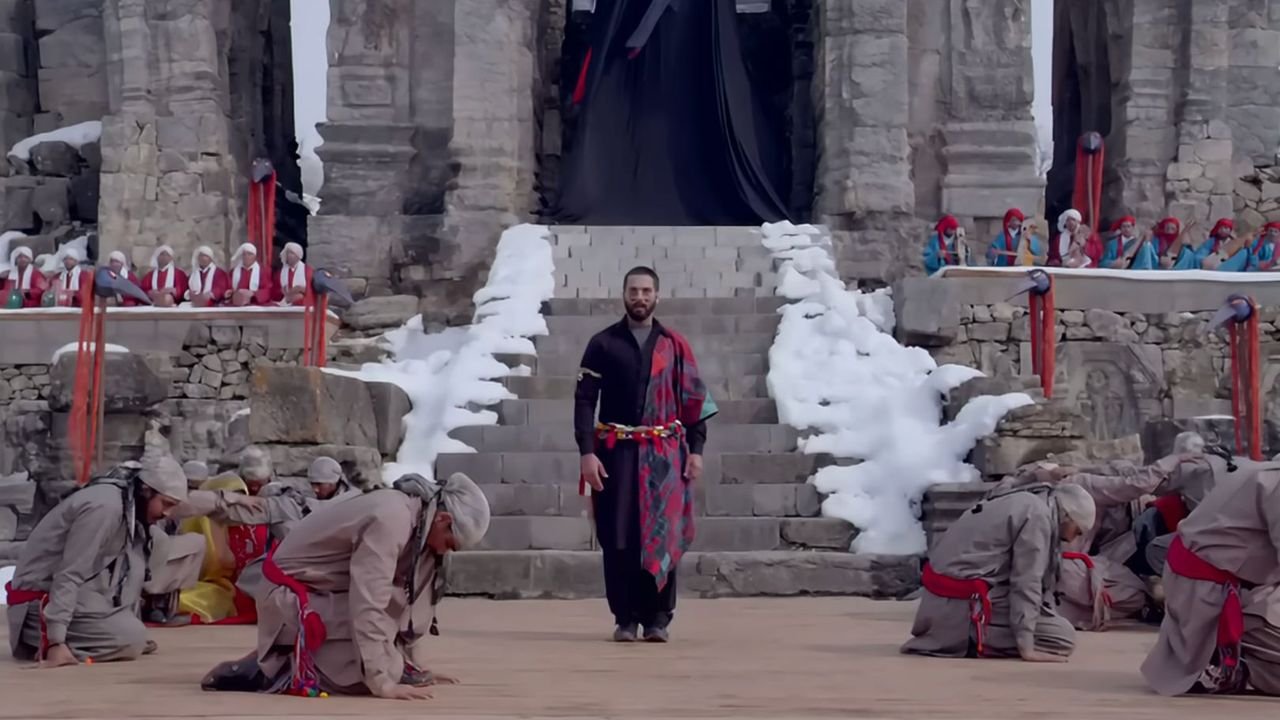
Haider (2014), Martand Sun Temple

Netflix
Vishal Bhardwaj’s Haider took inspiration not just from Shakespeare but from the Kashmiri architecture it was filmed in. The 8th-century Martand Sun Temple, with its towering stone pillars and skeletal ruins, gave the “Bismil” sequence an operatic scale, transforming an ancient relic into a stage for betrayal and spectacle. Srinagar’s Mughal-era Nishat Bagh, laid out in formal terraces with chinar-lined pathways, framed moments of intimacy against imperial geometry. In Anantnag’s Kehribal and Mattan villages, crumbling homes and narrow lanes provided a raw, unvarnished realism that no studio could recreate. Scenes at the Hazratbal Shrine and Zaina Kadal Bridge stitched the story into Kashmir’s layered cultural and architectural fabric, while Sonamarg’s alpine terrain expanded the narrative into stark natural grandeur. Together, these sites elevated Haider into more than a political drama—they made it a portrait of Kashmir told through its monuments, gardens, and ruins.