
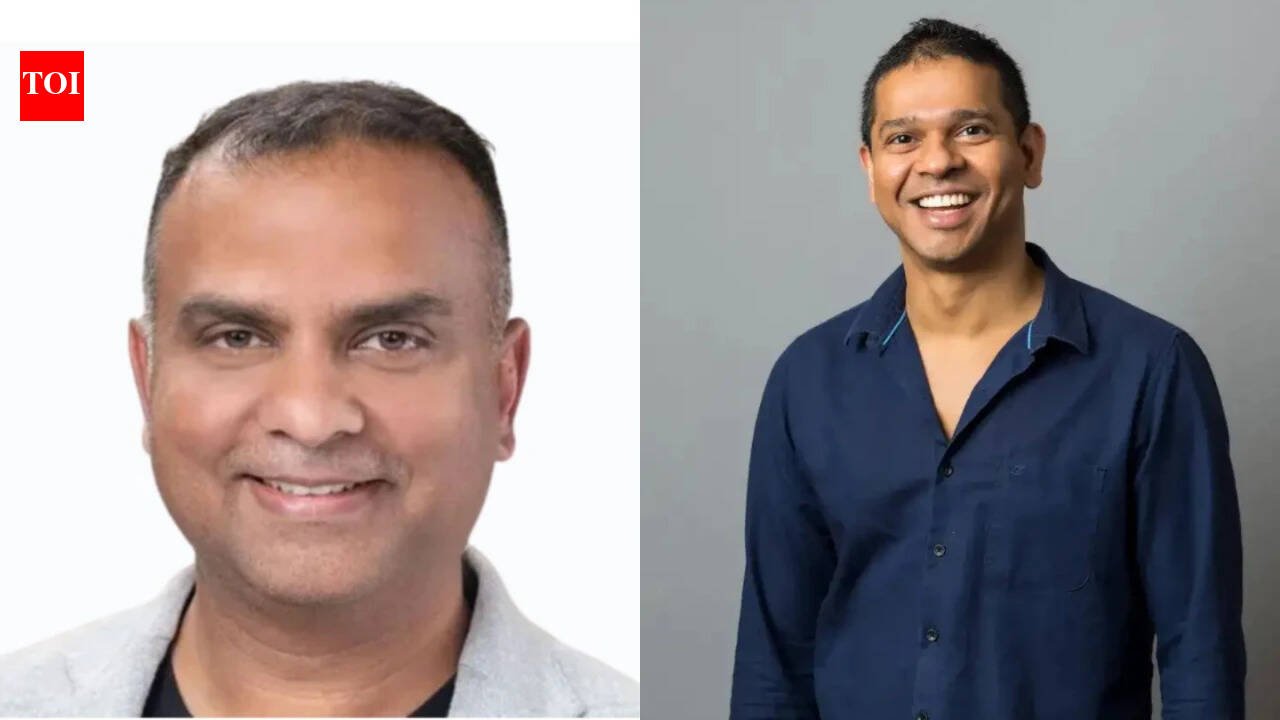
British sociologist Michael Young coined the word “meritocracy” in 1958, and he meant it as a warning. In his book “The Rise of the Meritocracy,” Young imagined a Britain where talent, rather than birth, decided who rose to the top, and cautioned that this would simply produce a new elite, one convinced its privilege was earned rather than handed down. The word has since lost its bite and become a compliment people pay themselves.That tension sits at the heart of India’s engineering education system too, where an Indian Institute of Technology (IIT) offer letter is treated with something close to reverence, the sort of institution parents invoke the way clergy invoke scripture. TIME magazine’s first-ever “Executives of the Year: Tech & Data” list, which recognises 50 leaders shaping technology and Artificial Intelligence (AI), includes several Indian-origin names: Reddit chief technology officer (CTO) Amit Puntambekar, OpenAI‘s CTO of Applications Vijaye Raji, Anthropic CTO Rahul Patil, and Walmart CTO Suresh Kumar. Two of them run the technical operations of the world’s most closely watched AI labs. Neither studied at an IIT.In a country where that omission is usually treated as a footnote, this one reads more like the headline.
The weight of an IIT degree in Indian tech
The record for IIT alumni is, admittedly, formidable. Sundar Pichai, chief executive of Google, studied at IIT Kharagpur. Arvind Krishna of IBM is an IIT graduate, and so are Vinod Khosla of Khosla Ventures and Nikesh Arora of Palo Alto Networks. Closer home, the chief executives of TCS, Infosys and ITC all passed through IIT gates. The pattern is real enough that its absence, in Raji and Patil’s case, is worth looking at.
Two routes, one table
Both arrived in the United States as engineers carrying degrees from institutions most people outside India would not recognise. Both spent over a decade climbing the ranks of established technology firms before their current titles came along. Both now sit atop the technical operations of AI labs valued in the tens of billions of dollars. Neither carries an IIT hall ticket, and neither, judging by where they have ended up, seems to have needed one.
Vijaye Raji’s road to OpenAI
Raji has served as CTO of Applications at OpenAI since September 2025. OpenAI runs on three divisions: Research, Scaling and Infrastructure, and Applications, the last of which takes what the other two build and, in Raji’s own words, “brings it to the people.” Data, experimentation and growth all fall under his domain.Raji holds a Bachelor of Engineering degree from Pondicherry Engineering College, graduating in 1999 according to his LinkedIn profile, a fact that would raise no eyebrows outside India and considerable ones within it. He spent a decade at Microsoft after graduation before moving to Facebook in 2011, then founded Statsig, the startup OpenAI folded into itself in a $1.1 billion deal in 2025. That deal is what brought him into the role he holds today.
Rahul Patil’s road to Anthropic
Patil was named Anthropic’s chief technology officer in October 2025. Anthropic, founded in 2021 by former OpenAI researchers, is best known for its AI assistant Claude and remains among the fastest growing companies in the field.Born and raised in Bengaluru, Patil completed his Bachelor of Engineering in Computer Science from PESIT in 2002, then left for the United States, where he earned a master’s degree from Arizona State University and a Master of Business Administration (MBA) from the University of Washington. Stints at Amazon Web Services, Microsoft and Oracle followed, along with a run as CTO of Stripe, before Anthropic came calling.Young’s meritocracy, it turns out, still runs partly on old fault lines. But at the very top of an industry that likes to imagine itself as the purest meritocracy of all, two of its most consequential technologists got there without ever needing the one credential their home country treats as non-negotiable. The ticket, this time, was optional.