
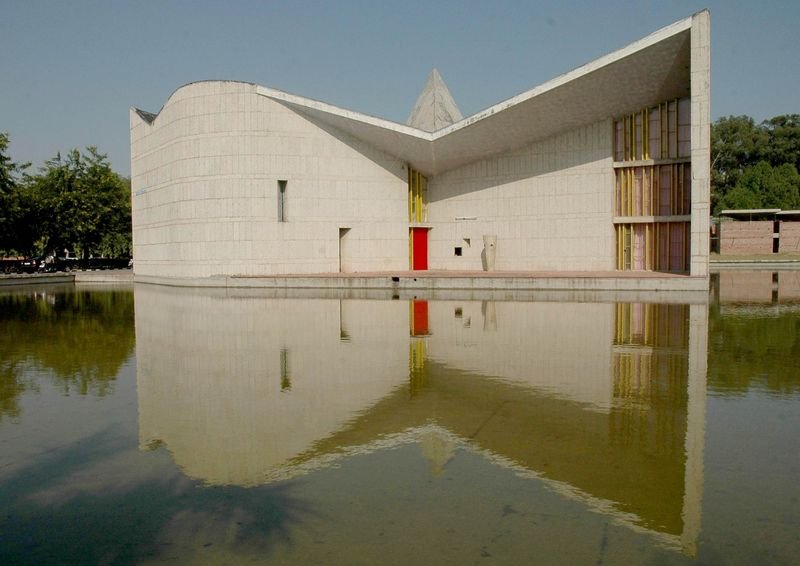
Covering vast educational aspects ranging from military history to heritage travel, the Institute of Social Science Education and Research (ISSER) at Panjab University has been carving out a distinct space for multidisciplinary undergraduate education for over a decade, but amidst a persistent shortage of regular faculty.
The institute, which started with 50 seats, doubled its intake to 100 starting from the 2025 academic session. This expansion coincides with the first four-year undergraduate cohort under the National Education Policy (NEP) 2020, giving students greater scope to pursue interdisciplinary coursework, research and co-curricular activities.
The research orientation of the new four-year programme was highlighted last month when two groups of fourth-year students secured funded projects under ICSSR themes worth around Rs 2–3 lakh on September 24. The grants-in-aid were awarded to initiatives on research for “youth and decolonisation” by Mishita and Mehakpreet, and “Cognitive challenges in the digital environment through the Bharatiya Knowledge System” by Vaishnavi and Vaidehi.
“The breadth of the curriculum is reflected in various courses ranging from archives and record management, sports psychology, parapsychology, national security studies, military history, digital governance and game theory—a subject more commonly encountered at the postgraduate level,” said Dr Mamta Duhan, guest faculty in military history. She added, “We try our best as teachers inside the classrooms, as well as through educational trips, seminars, and national conferences, to support and nurture the students of social sciences.”
The institute also revived its annual Raunak Mela after a gap of nearly six years, alongside student-led initiatives such as Cinema Sangam, Dopamine Launch, and Run-Vijay. However, this academic expansion has brought challenges, as the institute faces limited classroom infrastructure and a complete lack of regular faculty. Since its inception, it has functioned without regular teaching positions, relying entirely on research scholars and guest faculty.
“The institute’s aim is to continue expanding its academic and co-curricular horizons while creating greater opportunities for students. I managed to expand the seats and have already raised the faculty shortage issue with the university authorities,” said chairperson Dr Anju Suri.