
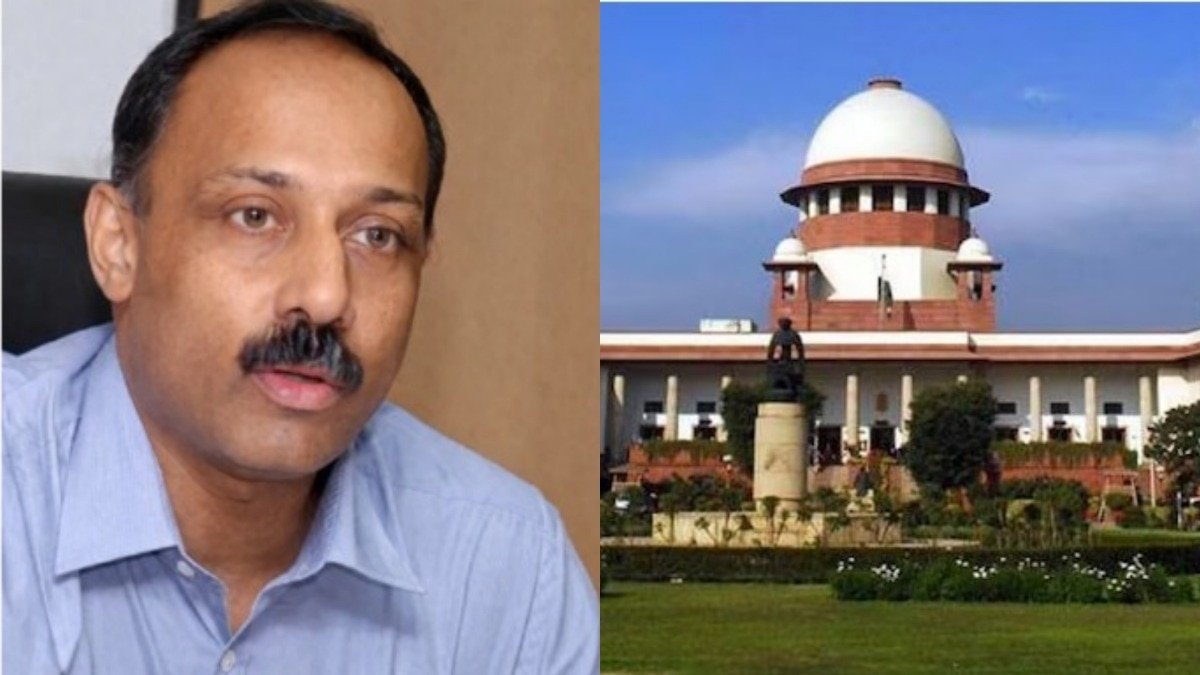
The Supreme Court has issued notice to Union Education Secretary T K Anil Kumar on a contempt petition alleging that an earlier court direction was not complied with. The matter was heard by a bench of Justices Dipankar Datta and Sheel Nagu, which sought a response within four weeks.
The contempt petition was filed by advocate Ashwini Kumar Upadhyay. He has alleged that the Education Secretary did not act on a representation seeking regulation and monitoring of institutions that provide secular education or religious instruction to children below the age of 14.
The court also made it clear that the Secretary does not need to appear personally when the matter is heard next.
WHY THE SUPREME COURT WAS APPROACHED
The case stems from an earlier Supreme Court direction dated May 11, when Upadhyay was asked to submit a representation to the Union government regarding his demands.
According to the petition, the representation sought steps to register, recognise, supervise and monitor institutions imparting education or religious instruction to children up to the age of 14.
Upadhyay later approached the Supreme Court with a contempt plea, alleging that the required decision had not been taken within the time allowed by the court.
The bench, while hearing the contempt matter, clarified that it would focus on whether its earlier order had been complied with. It said constitutional questions would not be examined in the contempt proceedings.
WHAT DOES THE PETITION SEEK?
The original plea raises questions about the regulation of institutions educating children below 14, particularly those operating outside the formal school system.
It seeks regulation of institutions providing both secular education and religious instruction, with registration, recognition, supervision and monitoring.
The petition refers to constitutional provisions including Article 21A, which deals with the right to education, along with Articles 39(f), 45 and 51-A(k).
Upadhyay has also challenged the interpretation of Article 30 and argued that minority institutions should not receive rights beyond those guaranteed under Article 19(1)(g).
CONCERNS OVER UNREGISTERED INSTITUTIONS
The petitioner has claimed that he visited several districts along the Uttar Pradesh border and found what he described as numerous unregistered and unrecognised institutions.
He has alleged that such institutions are increasing in border areas without effective regulatory oversight.
The petition argues that children are particularly vulnerable because of their age and that the state has a heightened responsibility to protect their education and welfare.
The Supreme Court has now sought the Education Secretary’s response. The matter is expected to come up again after four weeks, when the court will consider whether its earlier direction was complied with.
– Ends