
By Kartikeya V Sarabhai
It’s nearly 50 years since the Intergovernmental Conference on Environmental Education was held at Tbilisi, Georgia, in 1977. This was the meeting that defined what Environmental Education (EE) meant and what its scope was. At that time, there was a realisation that environmental literacy was a necessity for people living on this planet. The environmental crisis was no longer something which could be ignored. People needed not only to know about their environment but also to have the attitudes, values, commitment and the skills needed to protect and improve the environment. Over these 50 years, a lot has been achieved. The field itself has grown. The decade of education for sustainable development brought EE closer to the challenges of development and established the path for sustainability.
Environmental education brought in essential skills like critical thinking and systems thinking. Students learned to see human beings as part of an ecosystem, to be able to solve problems, and to understand that there was no fixed solution which you had to apply, but that you had to think of new solutions and new ways of solving it. So environmental education became almost as important as literacy and numeracy for the needs of the citizens.
This holistic perspective finds its clearest expression in the Sustainable Development Goals (SDGs), where environmental progress is inextricably linked to human equity.
The triple crisis of our planet, biodegradation, pollution and climate change, has led to a new awakening. Today, these words are no longer unknown to people. There is a large amount of awareness about it, but environmental education gives you a deeper understanding, impetus and thrust to actually do something about it. The concept of the handprint, which was developed and launched in 2007 by the Centre for Environment Education, is a very powerful one. It emphasised that we can each do something positive towards sustainability. We are no longer first getting educated and then acting, but taking action while we study.This action-oriented approach extends across all SDGs, and to bring this into every classroom, CEE has identified over 30 targeted actions that allow schools to localise the SDGs, making sustainable development a hands-on, daily learning experience. Educating for the SDGs requires addressing human equity alongside environmental stewardship. SDG 4 (Quality Education) is closely linked to gender equality, health, livelihoods, and poverty reduction. National frameworks such as the National Education Policy (NEP) 2020 and initiatives such as Beti Bachao, Beti Padhao and Samagra Shiksha aim to improve access, retention, and the quality of education.
The realisation that, holistically, it is not individual problems that can be solved, but that you have to go to the root cause of them. And what is that root cause? It is how we live, our lifestyles. In 2015, the Paris Agreement on Climate Change was being signed. The Indian government, under the leadership of the Hon’ble Prime Minister, insisted that lifestyles be mentioned in the preamble of that agreement. Because ultimately, lifestyles need to be changed; this is the heart of the whole issue. A behavioural change means the need for the right type of education.
The new educational curriculum in India has not only integrated EE at all levels but is introducing a special EE course at the 10th grade level. Earlier, it was felt that the infusion approach was the best one, but this was not enough. It is a good approach because the environment is not really a separate subject, but environmental sustainability needs to be incorporated into all subjects, whether it’s science or social sciences. And this is what the new education curriculum is doing. Through the government’s initiative of Mission LiFE, lifestyles for the environment are subjects which are brought into Eco Clubs. The goal is that every school has an Eco Club that looks at lifestyles. We are sure that with the handprint and Mission LiFE approaches, we will achieve the environmental literacy needed for a responsible and green Viksit Bharat.
To sustain this momentum, platforms like the International Conference on Sustainability Education (ICSE), organised by Mobius Foundation, through annual deliberations, set clear goals and collaborate to achieve them year after year. With the Handprint approach, localised SDG targets and commitments, we can achieve environmental literacy in every classroom.
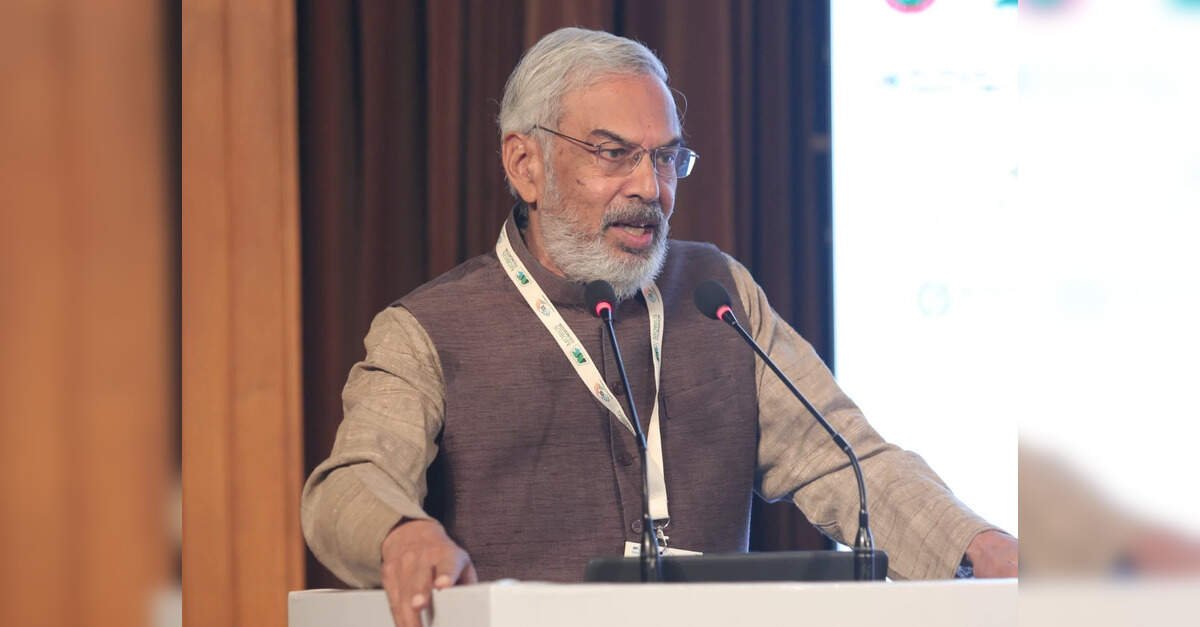
Kartikeya V Sarabhai is the Founder Director of the Centre for Environment Education (CEE) and a recipient of the Padma Shri award.
DISCLAIMER: The views expressed are solely of the author and ETEDUCATION does not necessarily subscribe to it. ETEDUCATION will not be responsible for any damage caused to any person or organisation directly or indirectly.