
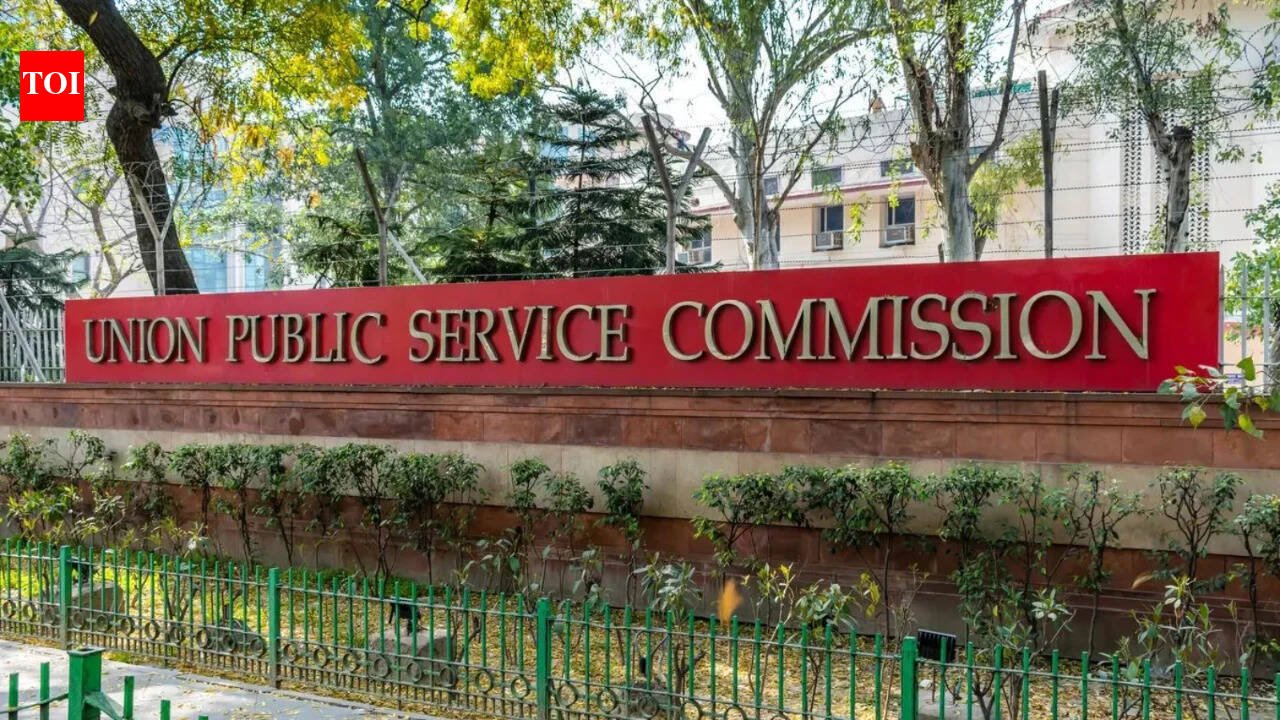
“The steel frame of India.” That was how Sardar Vallabhbhai Patel described the civil services on April 21, 1947, addressing the first batch of probationers at Metcalfe House in Delhi. The building, perhaps fittingly, had already housed the body that picks them for 21 years.On October 1, 2026, the Union Public Service Commission (UPSC) completes 100 years. It is worth remembering how modest, and how foreign, its beginning was.
A merit system that wasn’t built for Indians
The principle of entry by merit was formalised in 1855, when the Indian Civil Service (ICS) examination was instituted in London. It was held only in London, in English, and tested Greek and Latin, which were of little use in running a district in Bengal or Punjab but favoured those schooled in the British system.Satyendranath Tagore, elder brother of Rabindranath, sailed to England in 1862 to sit an examination his own country would not let him take at home. He cleared it in 1863 and became the first Indian in the service. The maximum age was then lowered progressively from 23 to 19. By 1919, only 78 of 1,255 ICS officers were Indian.The Commission came in 1926, under rules framed under the Government of India Act, 1919. Its Chairman and Members were appointed by the Secretary of State in London, and its first Chairman, Sir Ross Barker, came from the UK’s Home Civil Service. The preceding Lee Commission had proposed that four of every ten new entrants be British, which meant a guaranteed 40% of each intake went to the British by birth, not competition.Its powers were limited and drew sustained criticism from leaders of the freedom movement. But a permanent recruiting body now sat in India, staffed in India. That is why the Commission counts its history from 1926.
From advisory body to constitutional authority
Shri H.K. Kripalani became the first Indian Chairman in 1947. On January 26, 1950 the Federal Public Service Commission became the UPSC, and the Constitution gave it a place in Part XIV (Articles 315 to 323).The design aimed at insulation. Under Article 317, a Member can be removed only by the President after an inquiry by the Supreme Court. Article 322 charges the Commission’s expenses on the Consolidated Fund of India. Under Article 323, cases where its advice was rejected go before Parliament with reasons. In his valedictory address to the Constituent Assembly on November 26, 1949, Dr Rajendra Prasad said the independence of these commissions was essential to guard against jobbery, nepotism and favouritism.
The scale of the job
Applications across examinations and recruitment by selection grew from 42,727 in 1950-51 to a peak of 45,10,044 in 2022-23, more than a hundredfold. Examination centres rose from 8 in 1950 to 86 in 2026.The inclusion figures are the more telling ones:
- Women: 3 of 83 recommended in the Civil Services Examination (CSE) in 1952, against 299 of 958 in 2025. That is 31.2%, and women took 11 of the top 25 ranks. In 1972, Kiran Bedi was the only woman among 80 vacancies when she became the first woman selected for the Indian Police Service. Women were first admitted to the National Defence Academy and Naval Academy examination in 2021.
- Scheduled Castes (SC): 9 candidates recommended in 1955, 158 in 2025.
- Scheduled Tribes (ST): 2 in 1956-57, 73 in 2025.
- Persons with Benchmark Disabilities: 3 in 2002, 42 in 2025.
The Commission is careful about its role here. It did not write the policy of reservation, but it built the platform that implements it, including the Economically Weaker Sections category from CSE 2019 and a separate transgender category on its application form from 2020.
Fixing the process
The recent changes are mostly about trust in the process. At the Civil Services (Preliminary) Examination on May 24, 2026, face authentication was carried out for all of about 5.50 lakh candidates, using invigilators’ mobile phones and taking six to eight seconds per candidate. A scan of 15 years of data before that exam identified and rejected 569 applicants who had given false information to claim extra attempts.Interview boards have been randomised from the Combined Medical Services Examination 2025, with software setting the calling sequence. A provisional answer key for the Preliminary examination is now published soon after the test, with representations taken through an online portal.Candidates who clear every stage but miss the final list are now connected to employers through Pratibha Setu, a scheme revamped and renamed in June 2025.
What the figures leave open
A woman share of 31.2% is a record, not parity. And the Commission’s own Chairman, Dr Ajay Kumar, frames the next task in modest terms: “An institution that has endured for a hundred years does so not because it resists change, but because it knows what must never change.”A century ago, the struggle was for the right of Indians to compete. Today, by the Commission’s own account, the task is making sure that right reaches every deserving Indian who wishes to serve. The numbers show real movement. Whether they show arrival is a question the next century of annual reports will have to answer.