
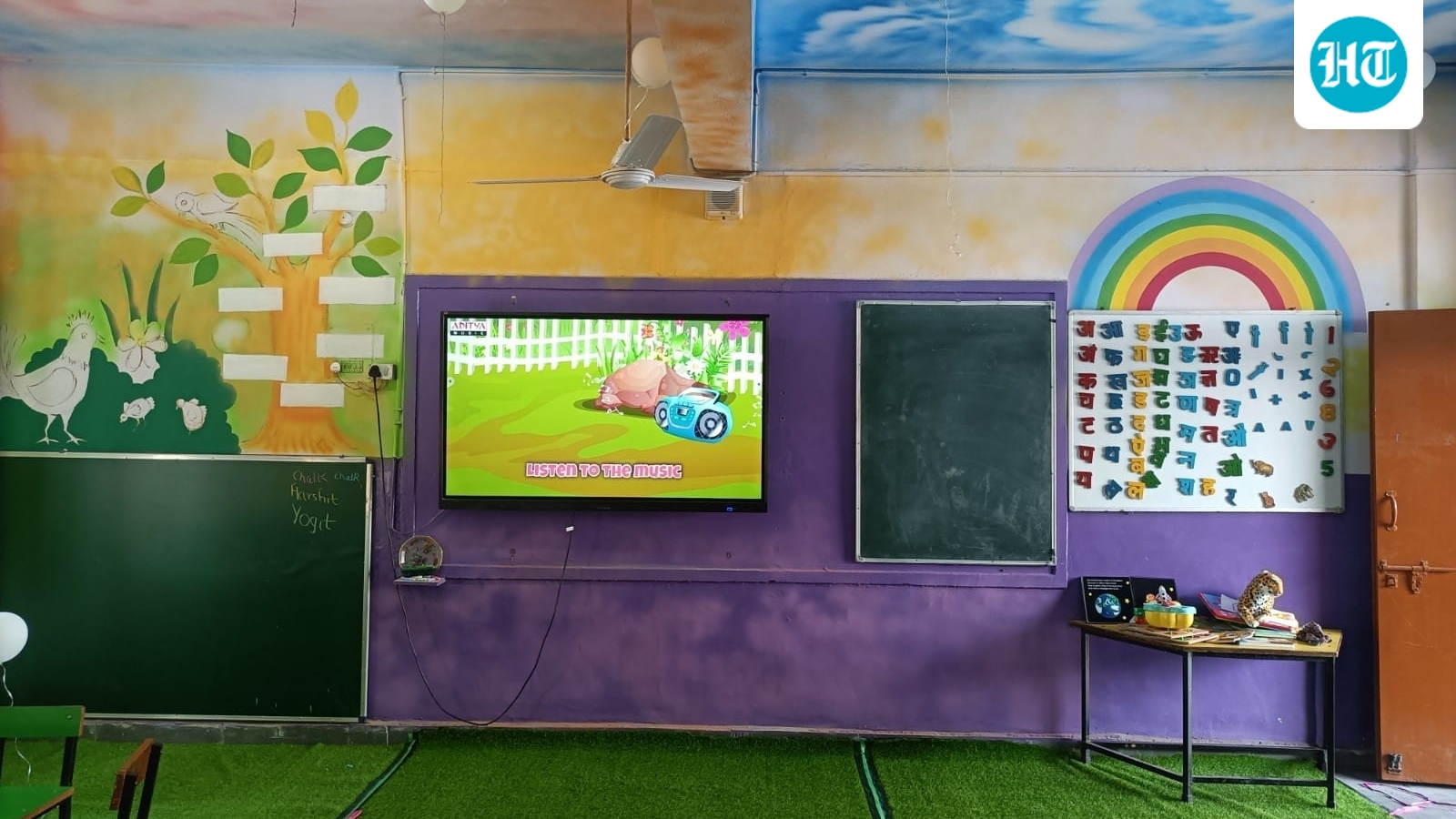
More than half of India’s five-year-olds are enrolled in primary school rather than pre-primary education, raising concerns about whether children are entering formal schooling before the recommended age, according to UNESCO’s 2026 Global Education Monitoring (GEM) report released on Friday.
“On average, 27% of students aged one year before primary already attend primary,” the report said, adding that this global figure is “largely driven by India, where 51% of 5-year-olds are enrolled in primary rather than in pre-primary education”. It noted that this share “likely increased during the COVID-19 pandemic, when early childhood education services were severely disrupted”.
What the UNESCO report said
The report cited India’s Unified District Information System for Education Plus (UDISE+) data maintained by the Union education ministry, to show that the share of children under six enrolled in primary rather than pre-primary education rose from around 35% in 2019 and 2020 to 41% in 2021 and 60% in 2022. The figures exclude Anganwadi centres and private kindergartens.
However, the report cautioned against assuming that all children entering primary school early have missed preschool. The share of students entering Class 1 with prior preschool experience increased from 41% in 2019 to 80% in 2025, suggesting that some children attend preschool before entering primary school early.
The report also flagged structural fragmentation in early childhood education in Bangladesh, India and Pakistan.
In India, provision is split between Anganwadi centres under the Ministry of Women and Child Development and emerging pre-primary classes under state education departments. Such fragmentation, it said, “reduces quality assurance capacity” and constrains curriculum-related efforts.
What is the Centre’s policy?
India’s findings come as the country works to implement the National Education Policy (NEP) 2020, which places children aged three to eight in the foundational stage. The framework comprises three years of preschool education, followed by Classes 1 and 2, and recommends that children enter Class 1 at age 6.
The Union education ministry directed states and Union territories in February 2023 to align the age of admission to Class 1 at six-plus years. Bal Vatika programmes have also been introduced in Kendriya Vidyalayas (KVs), while the three-month play-based module, Vidya Pravesh school preparation, was launched in July 2021 to help children transition into Class 1. Implementation of the age norm, however, has varied across states.
UNESCO report’s suggestions
The GEM report highlighted evidence that targeted support can improve early learning. In rural Karnataka, scholarships covering preschool fees increased participation by 20 percentage points, with cognitive gains continuing through Grade 1. It also cited research in India showing that adding part-time staff to preschools increased instructional time and improved quality.
Comparisons with other countries showed that Uzbekistan tripled preschool enrolment in seven years, while Azerbaijan brought access for five-year-olds close to universal levels within five years. The report’s findings underline the importance of expanding access to quality pre-primary education alongside efforts to ensure children enter formal schooling at the appropriate age.
The report also raised wider concerns about global access to education. An estimated 273 million children, adolescents and young people were out of school in 2024, 3% more than in 2015. The number has risen for seven consecutive years after declining by 33% between 2000 and 2015.
In higher education, India’s NEP 2020 sets a target of increasing the gross enrolment ratio from around 24% in 2024 to 50% by 2035. The report’s broader focus on access and equity highlights the challenge of ensuring that enrollment gains translate into meaningful educational opportunities for all.