
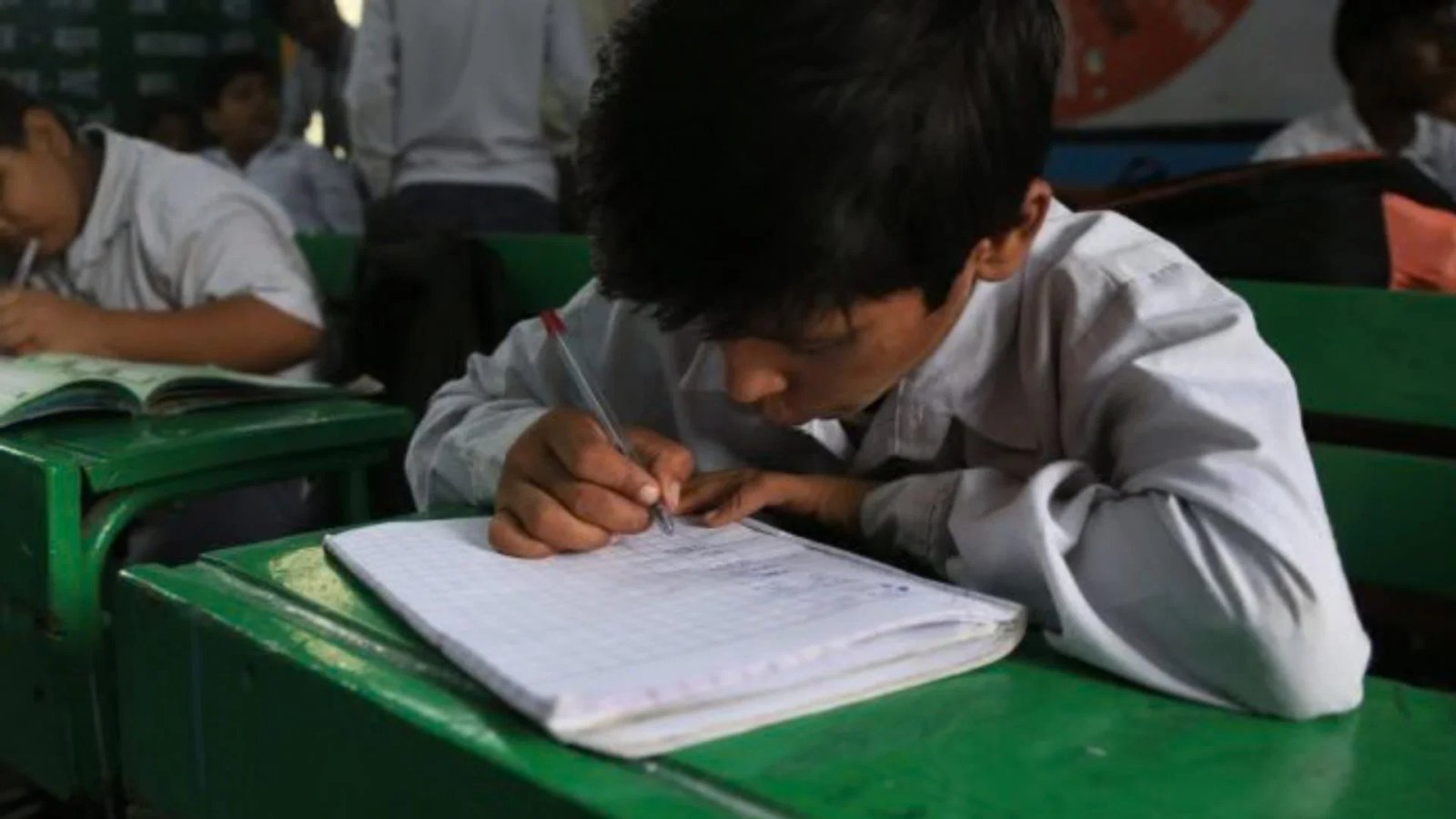
Bengaluru: Data shows Karnataka ranks among the lowest across India when it comes to the percentage of functional computers at government-run schools for teaching purposes, indicating a growing digital divide that conflicts with the southern state’s aspirations to become a formidable and future-ready talent pool.
Karnataka has 48,527 government schools, which account for just about 65 per cent of its total of 74,578. Of the total number of schools, 39,187, or 52.5 per cent, have computers for teaching purposes. Among government-run schools, 18,330, or 37.8 per cent, have computers for teaching purposes, according to state-wise highlights from the Unified District Information System for Education Plus (UDISE) for 2025-26, released earlier this year. The private schools are far ahead at 84.3 per cent.
This places Karnataka among the bottom 10 when it comes to government schools with “functional computers for pedagogical purposes”, data shows. Only Rajasthan (37.6 per cent), Chhattisgarh (33.6 percent), Bihar (33.1 percent), Arunachal Pradesh (31.2 percent), Jammu & Kashmir (27 per cent), Goa (25.2 per cent), Manipur (24 per cent), and West Bengal (20.5 per cent) rank below Karnataka.
Government officials who spoke to ThePrint suggested fresh data would project a different—better—picture. Even so, there appears to be a consensus among officials and sector experts alike that government education has been neglected, and private education prioritised, in the state over the decades.
“Karnataka has basically… education has been quite neglected… with piecemeal reliance on corporate social responsibility (CSR) funding. A lot of schools were forced to project deprivation, which was the barometer for attracting grants,” a government official said.
However, the official added: “The latest data would show a very different figure. Data entry is still in progress.”
Experts say a possible reason why Karnataka’s government education infrastructure has gotten the short shrift is because it is among states where prominent political leaders own a significant number of educational institutions.
ThePrint reached Madhu Bangarappa, Karnataka’s Minister for Primary & Secondary Education, for a comment, but calls went unanswered.
Also Read: Students use AI, parents panic — how Indian schools are finding ways to live with ChatGPT
An empty push
The national average for functional computers for learning is much higher than Karnataka, data indicates.
Across India, there are over 14.66 lakh schools, of which over 10 lakh are government institutions. Of the total 9.24 lakh schools (63.1 per cent) that have functional computers for teaching, 5.96 lakh (59.4 per cent) are government schools.
Karnataka lags even though it attracts the highest investments in technology and related fields, and is one of the country’s highest employers in these sectors.
These figures seem to undermine the central and state governments’ stated push to prime Karnataka students for the ongoing technological revolution from the early years itself. From Prime Minister Narendra Modi to Karnataka Chief Minister D.K. Shivakumar, several leaders have announced initiatives to equip students to handle AI as the technology makes giant strides.
At his maiden Independence Day speech as CM, Shivakumar proposed introducing AI-related education to students from Class 6 to enable young children to develop coding skills. He announced ‘AI Akshara Abhiyana’ and ‘Coding Gurukul’, the latter of which will provide students with opportunities to learn AI and coding from a young age.
These initiatives, coupled with the proposal to establish India’s first AI university in Bengaluru, would help Karnataka’s students cope with rapidly evolving technologies and empower them to enrich the state’s talent pool, Shivakumar said. “AI certificate courses will commence by January 2027. In addition, AI hubs will be established across the state,” he added.
‘Conflicts and crises’
Educational experts point to a larger problem within the existing governmental system that does not allow for reforms in the learning space.
Niranjan Aaradhya, a prominent commentator on public education, said the government has not fulfilled basics like adequate teachers, physical infrastructure, and learning materials, but is keen on technology-based schooling.
“Pedagogically, this is very unsound. People who have no pedagogical knowledge think of it as a fancy way to announce new programmes with AI and computer-based technology without providing basic infrastructure. Tech-based education has to be supplementary after the basics have been provided,” he told ThePrint.
He also pointed to another problem: elected representatives and private educational institutions.
In Karnataka, like several other regions of the country, elected representatives own and operate large educational institutions, which experts say creates a conflict of interest.
“Every minister, MP and MLA has their own private educational institutions and has converted these districts into their own republics. It shows that the people who are to bring out legislations, reforms and take bold decisions on public education prioritise their own interests,” Aaradhya said.
In Karnataka, Chief Minister Shivakumar is the founder of the National Education Foundation—a “public charitable trust” that seeks to advance “quality education through schools, colleges, and professional institutions”—with his immediate family members in leadership positions. His deputy, G. Parameshwara, heads a number of institutions in Tumakuru like Sri Siddhartha medical college, and institute of technology.
This list includes other prominent political personalities, namely Prabhakar Kore, M.B. Patil and the late Shamnur Shivashankarappa, who set up private educational institutions.
“There are significant conflicts and crises within the school education system in Karnataka. Unless we resolve this conflict, it is difficult to find any long-term solutions,” Aaradhya said.
Reached for comment, officials in the state’s education department said several policy measures are being implemented to rectify this neglect. However, they refused to divulge more details.
Edited by Sunanda Ranjan
Also Read: In the age of AI, India’s education system needs to cultivate skills, not just board exam scores
