
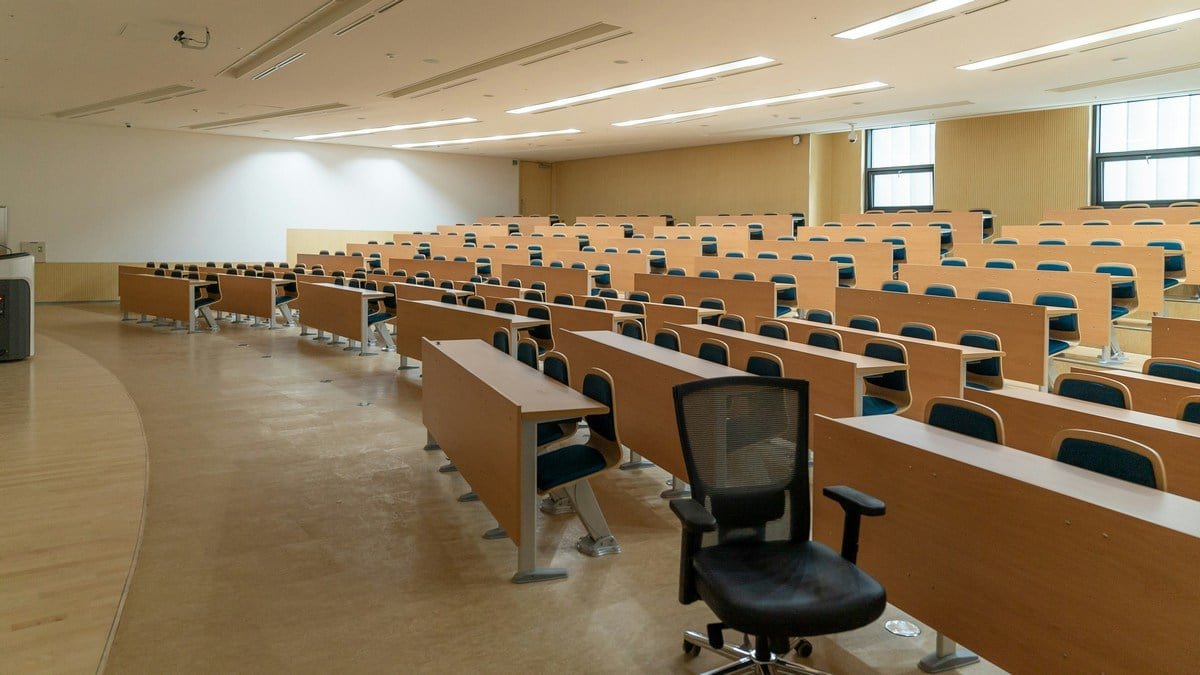
India’s higher education crisis is not always visible in broken buildings or empty campuses. It is often hidden in vacant faculty positions and prolonged searches for vice-chancellors. The result is classrooms functioning below their academic potential and weaker teaching, research, mentoring and institutional leadership.
India aims to become a developed country by 2047 and speaks confidently of artificial intelligence, semiconductors, quantum technologies, start-up firms, patents and world-class universities. But none of these ambitions can be sustained by policy declarations alone. They will ultimately be achieved, or frustrated, in classrooms, laboratories, libraries and research centres. A country cannot aspire to become a world knowledge superpower if it leaves a large proportion of its academic capacity empty.
What is particularly damaging is the leadership gap, which also reaches the bodies that oversee higher education. The University Grants Commission (UGC) has been without a regularly appointed chairperson since April 2025, when M Jagadesh Kumar retired. Deepti Gaur Mukerjee, secretary in the Department of Higher Education, currently holds additional charge.
Similarly, the All India Council for Technical Education (AICTE) has not had a regular chairperson since December 21, 2025, when TG Sitharam’s term ended; currently, Delhi University vice-chancellor Yogesh Singh has additional charge.
While these are still functioning institutions, prolonged temporary arrangements at the top of national regulators set a troubling example.
Also Read: India is producing more PhDs than ever. Its best researchers keep leaving
When temporary becomes permanent
University vice-chancellors and institute directors are responsible for faculty appointments, new departments, research centres and long-term planning. Yet, as of September, 37 of 155 major central higher education institutions — nearly 24 per cent— reportedly had interim or acting heads or leaders serving on extensions.
Of the 48 central universities, 20 had no regular leadership in place: 11 had in-charge heads while nine relied on extensions or similar arrangements. Since then, Allahabad University vice-chancellor Sangita Srivastava, who had been serving on an extension since November 2025, has been appointed for a second five-year term.
The picture is particularly worrying in the Indian Institutes of Information Technology, where 10 of 25 lacked regular full-time directors. Three IIMs, three NITs and one IISER were also functioning without regular directors.
Some searches have run for years. Indira Gandhi National Tribal University, for instance, first advertised its vice-chancellor’s post in June 2024 and then again in March 2026. Dr Harisingh Gour Vishwavidyalaya has had an in-charge vice-chancellor since July 2025.
Interim appointments are sometimes necessary during a transition, but they should not become a routine way of governing a university. It is difficult to plan for the next decade when leadership remains provisional. Similar delays affect state universities, though comparable nationwide figures are not readily available.
More students, fewer teachers
If the vice-chancellor’s empty chair is visible, the cost of an unfilled faculty chair is felt daily.
Figures presented by the Ministry of Education in Parliament showed that as of 1 July 2025, central universities had 18,951 sanctioned teaching posts, of which 4,889 were vacant. That is 25.8 per cent, roughly one vacancy for every four sanctioned posts. The number of posts and appointments has grown over the years, but this scale of vacancy cannot be treated as a marginal administrative problem.
The shortage is even sharper in the IIT system. As of 30 January 2026, 4,804 of 12,498 sanctioned faculty positions across the 23 IITs were vacant, a rate of 38.4 per cent. IIT Patna had a vacancy rate of about 54.6 per cent and IIT Kharagpur about 51.3 per cent.
This matters even more when capacity is expanding. The Union Cabinet has approved infrastructure expansion in five newer IITs to accommodate more than 6,500 additional students by 2028-29. More seats are welcome, but without sufficient teachers, expansion may weaken the education those students receive.
The story is much the same in the IIMs. RTI responses obtained from 18 of the 21 IIMs in 2026 showed that 32.3 per cent of 1,741 sanctioned faculty posts were vacant.
Existing teachers must take more classes and administrative duties, leaving less time for research and mentoring. Doctoral supervision becomes thinner, laboratories cannot use their full capacity, and fewer new research groups emerge. A shortage of senior professors also weakens the mentoring of younger faculty, the creation of new departments and the transmission of an institution’s intellectual memory. Students eventually pay through reduced course choices, less individual attention and fewer opportunities to participate in serious research.
Recruitment must keep pace with campuses
The government’s recruitment efforts deserve acknowledgement. According to an August 2026 parliamentary reply, central higher educational institutions filled 32,114 posts through mission-mode recruitment between September 2022 and 23 May 2026, including 18,757 faculty positions. This is a substantial achievement. But the number of appointments alone cannot tell us how much the vacancy backlog has fallen. Vacancies continue to arise, and recruitment must keep pace with them.
India needs a dependable recruitment system, not occasional drives. Searches for every vice-chancellor should begin at least six months before the incumbent’s tenure ends so that a successor can take charge without a gap. The UGC’s CU-CHAYAN portal already brings central university job advertisements together. The next step should be a national public dashboard, updated quarterly, recording sanctioned, filled and vacant posts, the age of vacancies, advertisement dates and the stage of each selection process across central universities, IITs and IIMs.
Faculty recruitment should follow rolling advertisements combined with a fixed quarterly selection calendar. Academic standards must not be diluted, but quality cannot become an excuse for leaving sanctioned posts empty for years.
Universities in remote locations also need a credible package to attract talent: adequate housing, start-up research grants, laboratories, support for children’s schooling, institutional help with spousal employment and a balanced teaching load during the initial years.
Most importantly, every approval for a new course, department or increase in student capacity should carry a simultaneous staffing plan, budget and recruitment deadline. Otherwise, buildings will open and seats will rise while the academic core remains hollow.
India’s higher education system has expanded at an impressive pace. But new buildings, departments and seats will mean little if universities lack teachers, researchers and stable academic leadership.
Campuses can be constructed in a few years, but strong intellectual communities take decades to nurture. The classrooms and laboratories of today will determine whether the promise of a developed India by 2047 becomes a national achievement or remains merely an aspiration.
Brajesh Kumar Tiwari is an associate professor at the Atal School of Management (ABVSME), Jawaharlal Nehru University, New Delhi. Views are personal.
(Edited by Asavari Singh)