
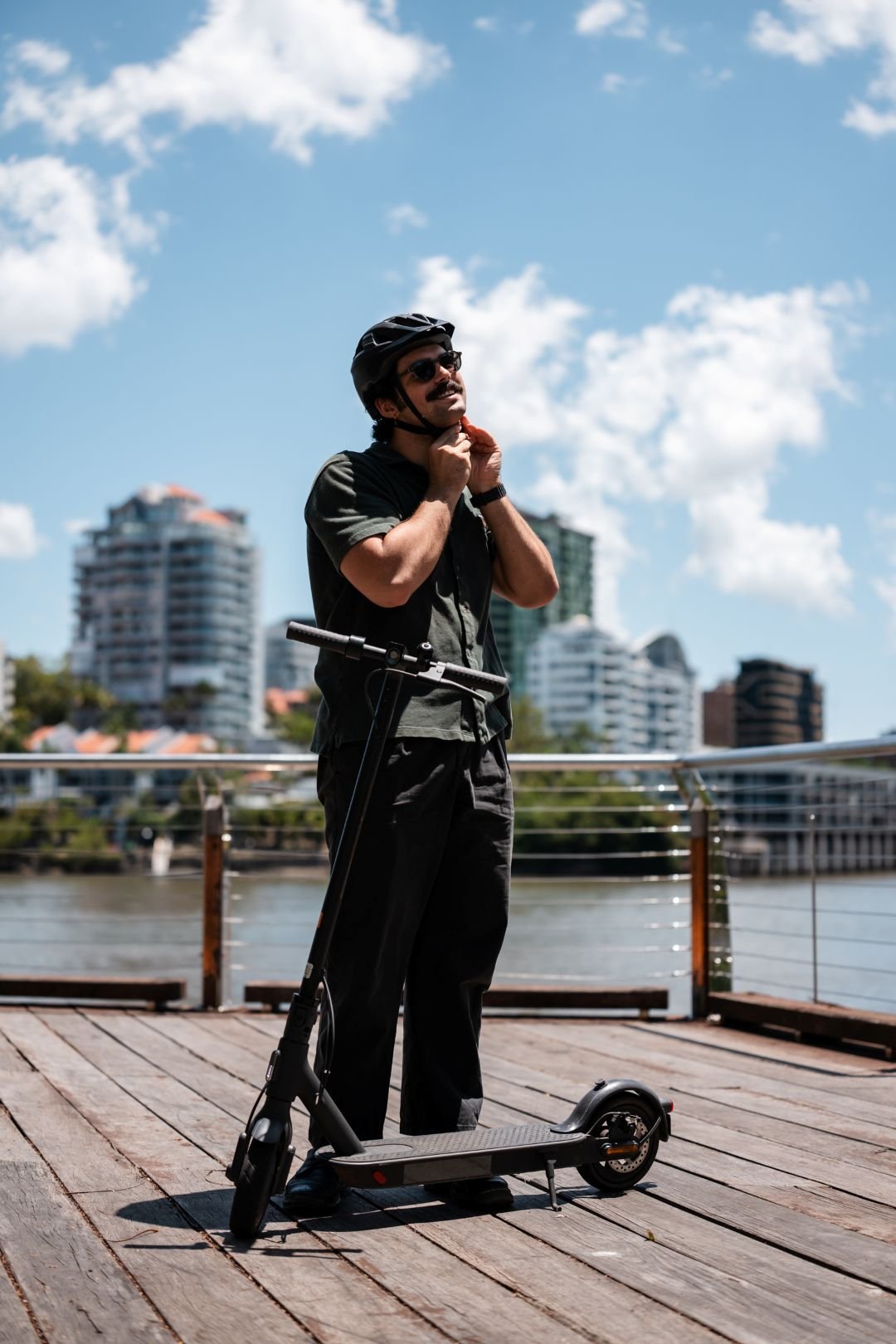
E-mobility ownership is now mainstream in Queensland with a survey finding almost one million privately owned e-bikes, e-scooters and other e-devices across rural, regional and metropolitan areas.
The University of Queensland study, funded by Transport and Main Roads, was the first statewide Australian estimate of e-mobility device ownership, use and travel exposure.
Dr Richard Buning from UQ’s Business School said e-mobility device use was not solely an inner-city phenomenon with remote households reporting ownership levels of 28 per cent.
“One in 3 Queensland households own an e-mobility device, at a cost of $2.2 billion,” Dr Buning said.
“For one in 4 e-mobility users, a private car is their only alternative.
“Those who own a device ride 1.46 billion kilometres, while another 130 million kilometres was travelled on rented e-mobility devices.
“The survey showed most households recognised the advantages of e-mobility as convenient short-distance travel, affordability, reduced reliance on private vehicles, increased independence for young people and environmental benefits.”
The survey data was collected from March to May 2026 via online platforms and a postcard mailer sent to households across metropolitan, regional, rural and remote areas.
E-bikes accounted for 61 per cent of all e-mobility ownership at 587,000, followed by 352,100 e-scooters and 30,400 other devices such as e-skateboards.
Annual e-mobility device purchases nearly quadrupled between 2020 and 2025, increasing by about 297 per cent from an estimated 50,300 devices to 199,600.
“Almost 90 per cent of e-mobility device owners reported using a helmet, contradicting non-owning households which commonly identified riders not wearing helmets as a concern,” Dr Buning said.

“This suggests public concern may be shaped by highly visible instances of non-compliance, hire-scheme users, occasional or inexperienced riders, or broader perceptions of e-mobility risk.
“The stereotypical e-mobility rider is a young person on an e-scooter, but our data tells a different story with more than half of the primary users of privately owned devices aged 50 or older.”
Dr Buning said while e-mobility use was providing real transport benefits, community concerns about rider behaviour and growing injury numbers needed to be addressed.
“The survey classified about half of privately owned devices as non-compliant based on participants’ self-reported speed, power and throttle characteristics,” Dr Buning said.
“The most common non-compliance issue is having a maximum powered speed exceeding 25 km/h, followed by e-bikes exceeding 250W, e-bikes with multiple non-compliance reasons and throttle-only e-bikes.
“Injury presentations have also increased as e-mobility has grown rapidly, but until we can reliably relate injuries to the number of riders, trips and kilometres travelled, we need to be careful about interpreting those raw numbers as changes in risk.”
Following a recent state government inquiry, several new e-mobility laws have been introduced in Queensland with consequences including riders facing hundreds of dollars in fines and devices confiscated.
Dr Buning said ending the sale of noncompliant e-mobility devices and improving infrastructure was key to ensuring Queensland residents were safe and could embrace a commonsense e-mobility future.
“When devices are used on roads, riders may be exposed to motor-vehicle traffic; when they are used on footpaths or shared paths, pedestrians may experience discomfort from close passing, speed differences or unpredictable movement,” he said.
“More resources and research are needed to understand and address the challenges of integrating e-mobility devices into Queensland’s transport system, similar to many cities across the world.”