
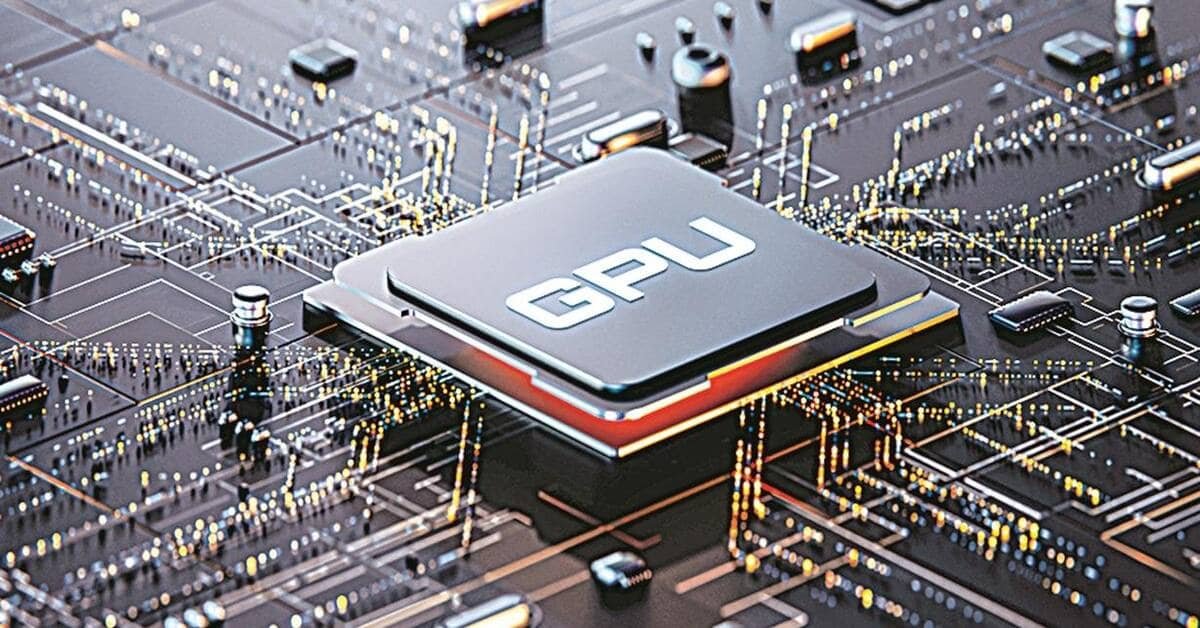
An entire engineering team can lose a quarter waiting for graphics processing units (GPUs), the specialised chips used to train and run AI models. Deliveries can take three to four months, investors and founders say.
“Early-stage startups get credit so compute affordability is not an issue in the first year. However, the challenge with AI compute is not just affordability, but access,” said Rahul Agarwalla, managing partner at SenseAI Ventures.
“With demand outstripping supply, companies are increasingly looking to secure capacity in advance. Three-year commitments are better to get capacity, but it’s difficult for startups to accurately forecast demand,” he added.
Established startups such as payments technology platform Juspay can afford to front-load investments in securing compute, but they face the same queue when procuring GPUs.
The Bengaluru-based financial technology company swung to a net loss of ₹90 crore in 2025-26, after posting its first annual net profit of ₹62 crore, as it stepped up spending on AI infrastructure and overseas expansion.
“I wish I could spend more on GPUs, and I say that because it is hard to get GPUs allocated. Right now, I don’t have enough GPUs, and I am bottlenecked. I have been given commitments that it will take three to six months to come,” Juspay Cofounder and Chief Operating Officer Sheetal Lalwani said during a media briefing this month.
Across India’s AI ecosystem, founders and venture capital investors describe the same paradox: the constraint has shifted from what a company can afford to what it can actually get.
A chip delay, a quarter lost
Ashish Taneja, founding partner and chief executive officer (CEO) of growX ventures, said, “When a GPU card takes three or four months to arrive, a whole engineering team can lose a quarter, and that hurts far more than a chip being a generation old.”
Compute affordability is generally not an issue for startups in their first year, given the Cloud credits they receive, Agarwalla said.
Gokul N A, founder of growX-backed robotics company CynLr, said, “After you order a GPU card, you may wait three or four months, and the whole team waits with it. Pricing on industrial-grade chipsets fluctuates too, sometimes by 2x or 3x.”
Rent by the token, or own the machine?
The answer lies in how AI is billed.
Frontier AI laboratories (labs) such as OpenAI and Anthropic charge by the token, a small unit of text that an AI model reads or generates. The bill therefore rises with usage.
Heavy workloads such as AI-assisted coding, in which models read and rewrite large volumes of code, can consume tokens quickly.
Subscription plans offer a fixed allowance, but Lalwani said those allowances are “already one-fifth of their peak today” as providers try to make the plans pay. “Those subs have to make sense eventually,” he said.
The alternative is to run freely available open-source models on GPUs a company controls. The cost then stays fixed regardless of how much the models are used. Juspay runs about 95 per cent of its AI-assisted coding this way.
“Renting an 8-node GPU costs ₹25-35 lakh a month, while buying the same work as tokens from frontier labs could be even 5x, 10x that cost,” he said.
Agarwalla agreed that “dedicated or leased infrastructure can become more cost-effective as workloads grow and utilisation becomes predictable”.
Taneja cautioned, however, that most startups building applications should still rent. Buying GPUs too early, he said, “locks capital into hardware that’ll be out of date before the product has found its market”.
The bottleneck behind the bottleneck
“Chip and component supply have been a challenge from the pandemic days through this AI boom,” said Srinivas Shekar, founder and CEO of data-security firm Pantherun.
The company now designs around several suppliers so that no single vendor can hold up a delivery.
Lalwani said the bottlenecks extend beyond GPUs themselves. The first is memory. Advanced AI chips rely on high-bandwidth memory (HBM), which is stacked close to the processor to feed it data fast enough to keep it working.
Only three companies — SK hynix, Samsung, and Micron — produce HBM at scale. Micron said in December 2025 that its entire 2026 HBM supply had been committed, while SK hynix said in October 2025 that it had secured demand for all its memory chips for 2026.
The second constraint is power and data-centre space.
A GPU is useful only when installed in a facility that can supply continuous power and keep it cool, unlike an ordinary server. Outside India, procuring GPUs is harder because data centre capacity and power have largely been committed to hyperscalers, Lalwani said.
He warned that even in India, larger players could lock up data centre capacity and power in the future, even if chip procurement eases over the next 12 months.
A public pool, private constraints
The government’s IndiaAI Mission has onboarded more than 38,000 GPUs that startups and researchers can rent at subsidised rates. Taneja said the pool “has scaled faster than almost anyone predicted, and for training language models in a data centre it does the job”.
Some companies, however, need compute in a different form.
“Think about how long a WhatsApp message sometimes takes to arrive, and now imagine that delay when the arm has to stop before it hits a wall. The compute has to sit right next to the robot, physically wired in. So we’re forced to train robots live and keep our compute local,” Gokul said.
Defence technology firm Armory cannot run its workloads on shared servers for security reasons. “The IndiaAI pool would work much better for us if it offered dedicated rack space as metal-as-a-service, similar to the Equinix model, where the provider manages power, cooling, and connectivity and the customer manages the control plane. Offering only AI compute also isn’t ideal. A defence technology company runs many kinds of workloads, and splitting them across providers adds overhead,” a spokesperson for the company said.
Beyond the cheque: Can they get compute?
Taneja said compute can account for half or more of a funding round at a company training its own foundation model, compared with 10 to 20 per cent at a company building applications on other models.
In robotics, the arithmetic is harsher.
Gokul estimated that running a robot the way large language models run today could cost “two to three million dollars per robot per year”, compared with $230,000 a year for a worker across three shifts. “Nobody will adopt that,” he said.
Despite the waiting times and costs, companies are looking to invest further in the space.
- With demand outstripping supply, companies are increasingly looking to secure capacity in advance
- When a GPU card takes 3-4 months to arrive, a whole engineering team can lose a quarter
- Procurement of GPUs is harder outside India
- Dedicated or leased infrastructure can become more cost-effective as workloads grow