
Thank you for reading this post, don’t forget to subscribe!
Can the Bar Council of India, which regulates the legal profession, also control law colleges? The Supreme Court signalled its doubt, asking what the BCI knows about legal education when there are eminent scholars and academics for that, and observing that a regulator cannot itself run the institutions it is meant to regulate. It will examine whether the BCI has the statutory power to control law schools at all.

New Delhi: The Supreme Court has observed that it will examine whether the Bar Council of India (BCI), as a statutory regulator of the legal profession, has the power to control and regulate law colleges or universities [Girish Mittal v. Bar Council of India].
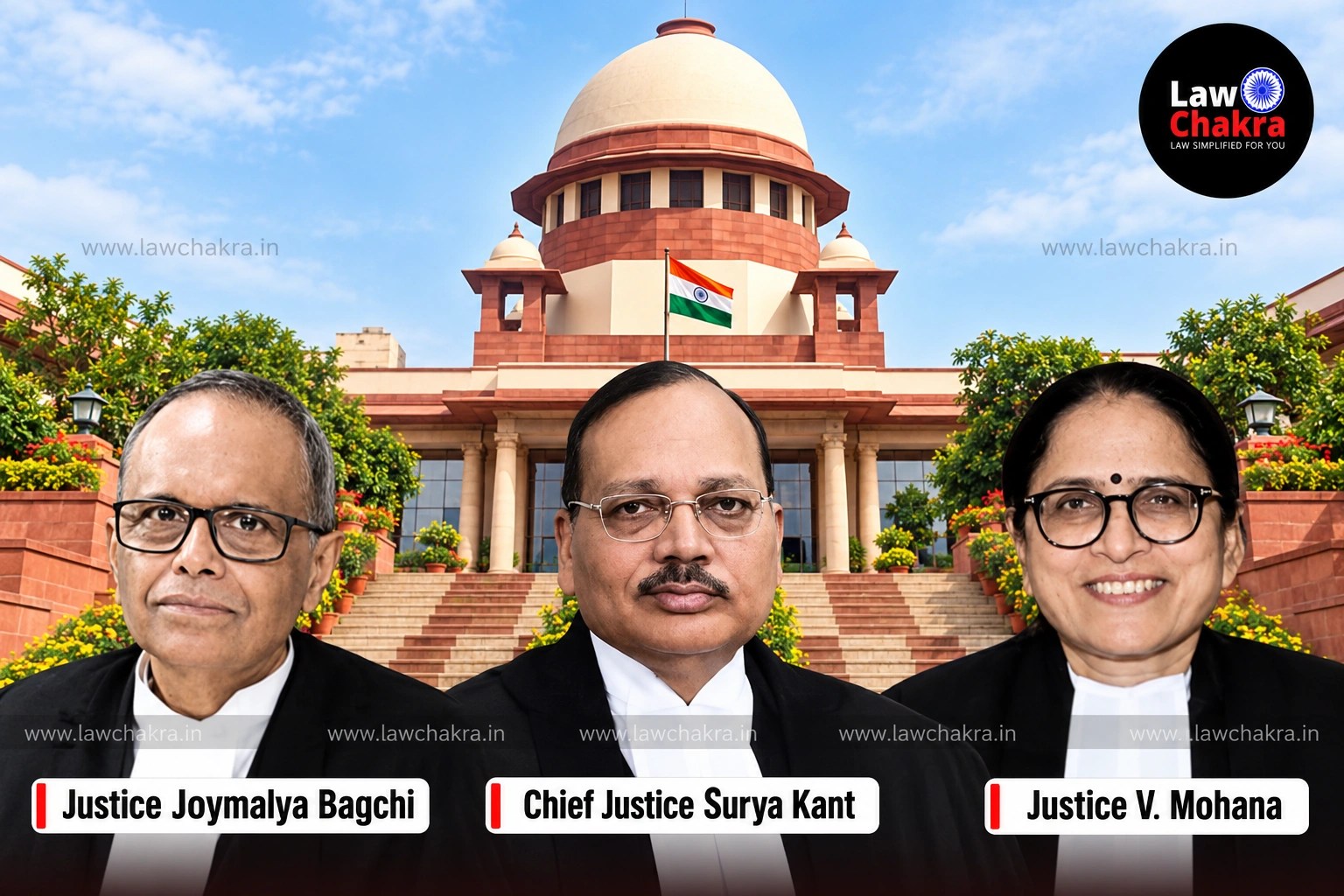
A Bench of Chief Justice of India Surya Kant, Justice Joymalya Bagchi and Justice V. Mohana was hearing pleas challenging the functioning of the BCI-PEARL FIRST Trust and the establishment of law institutions by the Trust.
‘What do they know about legal education?’
The Court questioned how the BCI could be regarded as an expert body to regulate legal education, observing that eminent law scholars and academics were better placed to deal with academic matters. While the BCI could lay down general guidelines, such as whether a law course should be of four or five years’ duration, it could not, the Court indicated, exercise control over legal education itself. “How the BCI is expert body to regulate legal education? What do they know about legal education? There are eminent law scholars, academia… you can lay down general guidelines… curriculum should be 4 or 5 year… but you can’t control,” the CJI observed.
The CJI framed the core issue that the Court would take up. “How can BCI regulate law colleges? That’s the real question,” he said, noting that the statutory role of the BCI comes into existence after a person obtains a licence to practise law, and questioning whether that role extends to regulating a law school or university. “Whether law school can be regulated? If that is answered, this is resolved. We’d like to examine whether BCI has power to control and regulate university/law college,” the CJI said.
The petitioners’ case
Advocate Prashant Bhushan, appearing for the petitioners, submitted that the BCI had, in 2016, passed a resolution abolishing its earlier Trust and transferring its funds to a new Trust, and, referring to a pending CBI investigation, questioned the creation of the BCI-PEARL FIRST Trust. He alleged that the BCI Chairman had declared himself a lifetime trustee of the Trust, and that the Trust had gone on to establish one law college in Goa and another in Andhra Pradesh. He further challenged two State legislations concerning the institutions, arguing that they effectively placed the institutions under the BCI’s control. “The Acts say BCI will nominate 27 out of 35 members of the Executive Council. It also says the Trust will run the law colleges,” he submitted, contending that a regulator could not itself run an institution it was required to regulate, which raised a conflict of interest.
Senior Advocate Guru Krishna Kumar, for the BCI, submitted that, following the Court’s earlier observations questioning clauses that allowed BCI office-bearers to be permanent trustees even after their tenure, the BCI had passed a resolution providing that there would be no lifetime trustees and that a trustee’s tenure would be co-terminus with BCI membership. Bhushan, however, maintained that the statutory provisions themselves conferred substantial control over the institutions on the BCI. When the CJI noted that the first law school in the country had also been established by the BCI, Bhushan responded that the institution referred to was a public university whose Executive Council was not dominated by the BCI. Senior Advocate Shobha Gupta, in a connected matter, submitted that crores of rupees were coming into the Trust and the matter required scrutiny.
The Bench issued notice on the petition and sought the response of the Bar Council of India.
Why it matters
The question the Court has framed goes to the boundaries of the BCI’s statutory mandate. Under the Advocates Act, the BCI regulates the legal profession and enrolment as an advocate; the petitioners’ argument, which the Court appeared to find weighty, is that this professional-regulatory role does not, of itself, extend to controlling the academic content and governance of law schools, which is the province of universities and academic experts. If the Court holds that the BCI’s writ runs only to the profession and to broad guidelines, and not to the control of legal education, it would significantly reshape the balance between the BCI and the universities in the governance of legal education.
Overlaying the competence question is a conflict-of-interest concern. The petitioners contend that the BCI, or a Trust dominated by it, cannot both regulate law institutions and run them; a body that sets the standards for law colleges and also operates law colleges of its own occupies both sides of the regulatory relationship. The financial dimension, the routing of funds into the Trust and the questions raised about its constitution, adds to the Court’s disquiet, and connects this matter to the wider scrutiny the BCI’s functioning and finances are currently receiving.
Nothing has been decided. The Court has only issued notice and identified the question it wishes to examine, and the BCI will place its response on record. These are, at this stage, the petitioners’ contentions and the Court’s preliminary observations; the validity of the State legislations, the propriety of the Trust and the reach of the BCI’s regulatory power over legal education all remain to be adjudicated as the matter proceeds.
Case Title: Girish Mittal v. Bar Council of India [W.P.(C) No. 1115/2026]
Bench: Chief Justice of India Surya Kant, Justice Joymalya Bagchi and Justice V. Mohana, Supreme Court of India
Appearances: Advocate Prashant Bhushan for the petitioners; Senior Advocate Guru Krishna Kumar for the BCI; Senior Advocate Shobha Gupta in a connected matter.
Status: Notice issued; BCI’s response sought. Court to examine whether the BCI has the power to control and regulate law colleges. No final view expressed.
FOLLOW US FOR MORE LEGAL UPDATES ON YOUTUBE