
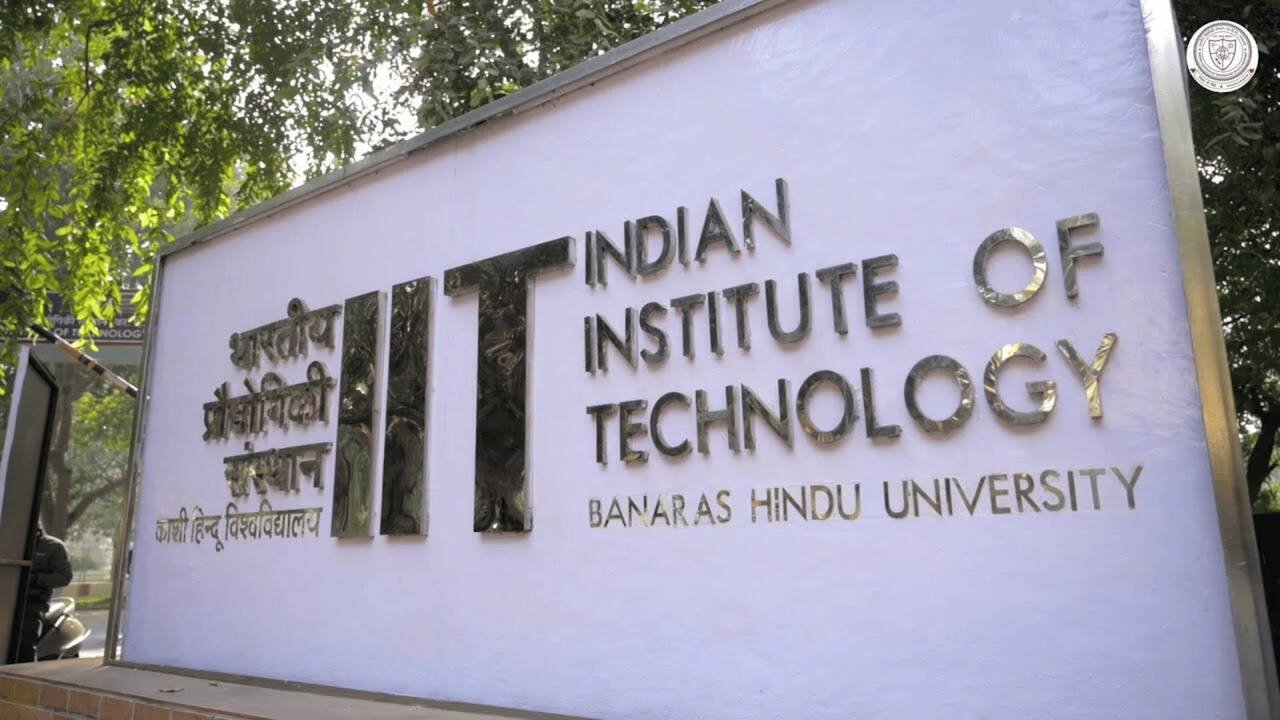
IIT (BHU) Varanasi is creating a School of Physical AI and Autonomous Systems. The goal is to bring intelligence into the real world. This will be done using robotics, smart machines and autonomous technology.
The school will focus on combining intelligence with sensors and machines.
The report says a four-year BTech program will start in 2027. The program will focus on hands-on learning and building machines through projects. For example a machine that can move through a busy factory without bumping into people, or even a smart farming system that can spot crops and react to their needs.
These kinds of technologies are not about writing code instead require machines that can sense their environment and this is what Physical AI is all about.
The Indian Institute of Technology (BHU) Varanasi is setting up this school to work in this area. The move could create paths for students who are passionate about artificial intelligence, robotics and engineering.
The institute officially announced the school on July 15, 2026. On July 18, 2026 it also announced the formation of a coordination committee as per official information available on their official website.
Most students have come across AI through chatbots, image generators, voice assistants and tools that answer questions or create content. These tools mainly work with information while a Physical AI takes intelligence a step further by linking it with machines that interact with the real world.
For example, a chatbot can explain how to move an object. A robot using Physical AI could recognize that object, figure out how to pick it up and use its mechanical parts to do the job.
This Physical AI brings together AI models with technologies like sensors, cameras, motors and robotic systems. Sensors gather information about the environment while AI helps the machine understand that information and decide what to do. The machine can then take action through its motors or other mechanical parts depending on the system it might also learn from feedback.
This kind of technology is being studied for robots, self-driving cars, industrial automation and other systems that need to handle changing situations.
According to IIT (BHU)s description the School of Physical AI aims to create an interdisciplinary environment for developing intelligent machines, robotics and autonomous systems. The focus is on moving AI beyond applications and developing technologies that can perceive reason, learn and interact with their surroundings.
This work requires knowledge from fields, including computer science, electronics, mechanical engineering, control systems and robotics.
Bringing these areas together can help researchers develop machines that are not only intelligent, in theory but also capable of performing useful tasks.
The initiative also reflects the growing importance of AI research that connects software with devices. However, the establishment of the school should not be confused with the completion of its research projects.
The institute’s announcement confirms the school and its purpose; individual projects, facilities and future research outcomes will need to be assessed as they are announced.
A report published by renowned media house on October 18, 2026 says that IIT (BHU) plans to start a four-year BTech programme in Physical AI and Autonomous Systems in the 2027 session.
According to the report, admission to the programme is expected to be through JEE Advanced. It also explains the learning model that focuses on giving students real world experience in building machines. This approach moves beyond classroom teaching and emphasizes hands-on work.
The report says the programme will focus on project-based learning where students will be expected to build machines as part of their work. There is also mention of industrial exposure during the course, which could help students gain practical skills. However, these features might make the programme especially appealing to students who enjoy using ideas to solve real problems.
Therefore, interested students must check IIT (BHU)s admission notifications before making any decisions.
The exact admission process, seat intake, eligibility requirements, fees and final curriculum should be confirmed through documents when they are released.
Physical AI has potential applications across several industries, such as:
1. Healthcare and medical technology: AI enabled robotic systems could help doctors with precise procedures, support rehabilitation and assist with certain repetitive tasks.
Any medical use would require appropriate safety checks and human oversight.
2. Agriculture industry: Smart machines could help monitor crops, identify weeds, support harvesting and use resources more efficiently. These applications may be especially useful where farmers need to manage large areas or reduce manual work.
3. Manufacturing sector: Robots equipped with AI could inspect products, handle materials and adapt to changes on production lines.
This could help improve efficiency while reducing some risks for workers.
4. Tertiary sector: AI powered vehicles and mobile robots use cameras and other sensors to understand their surroundings, identify obstacles and plan movements. Developing reliable systems requires extensive testing because real-world conditions can change quickly.
5. Space research: Autonomous machines could support exploration in environments where direct human control is difficult.
Such systems need to make decisions using information collected by their sensors.
It is important to note that these are potential applications of Physical AI as a field, not a list of projects that IIT (BHU) has confirmed it will develop.
Students who are interested in Physical AI can lay a foundation in mathematics, physics, computer programming and engineering. Later, depending on their interests students may choose fields such as robotics engineering, machine learning, embedded systems, computer vision, automation and autonomous vehicles.
Physical AI also demands people who can collaborate across disciplines. For example, a robot needs software to make decisions, sensors to gather data and mechanical parts to perform actions. Professionals in this area must understand how all these parts fit together.
Career options in Physical AI include robotics engineer, AI engineer, automation engineer, computer vision engineer and research scientist. The qualifications needed will differ by role.
Some research jobs may require a postgraduate degree as well.
Therefore, students should remember that careers related to AI are not guaranteed by choosing a specific degree, rather a practical knowledge/ experience, problem‑solving skills, solid fundamentals and the ability to work with systems remain essential.
The School of Physical AI and Autonomous Systems could be a place where AI education meets real-world engineering.
For students it shows that artificial intelligence is not merely about chatbots or software. It can also be used to control machines, run factories, watch over crops and help people work with technology in ways.
This field brings together parts of engineering and opens up chances for students who like both coding and building things. As the school grows anyone interested should keep an eye on updates from IIT (BHU) to know the exact courses being offered.
For students thinking about a future in technology, Physical AI is something to pay attention to. It’s not because all machines will become autonomous soon, instead it is because the ability to link intelligence with real world is becoming more and more important in technological research.