
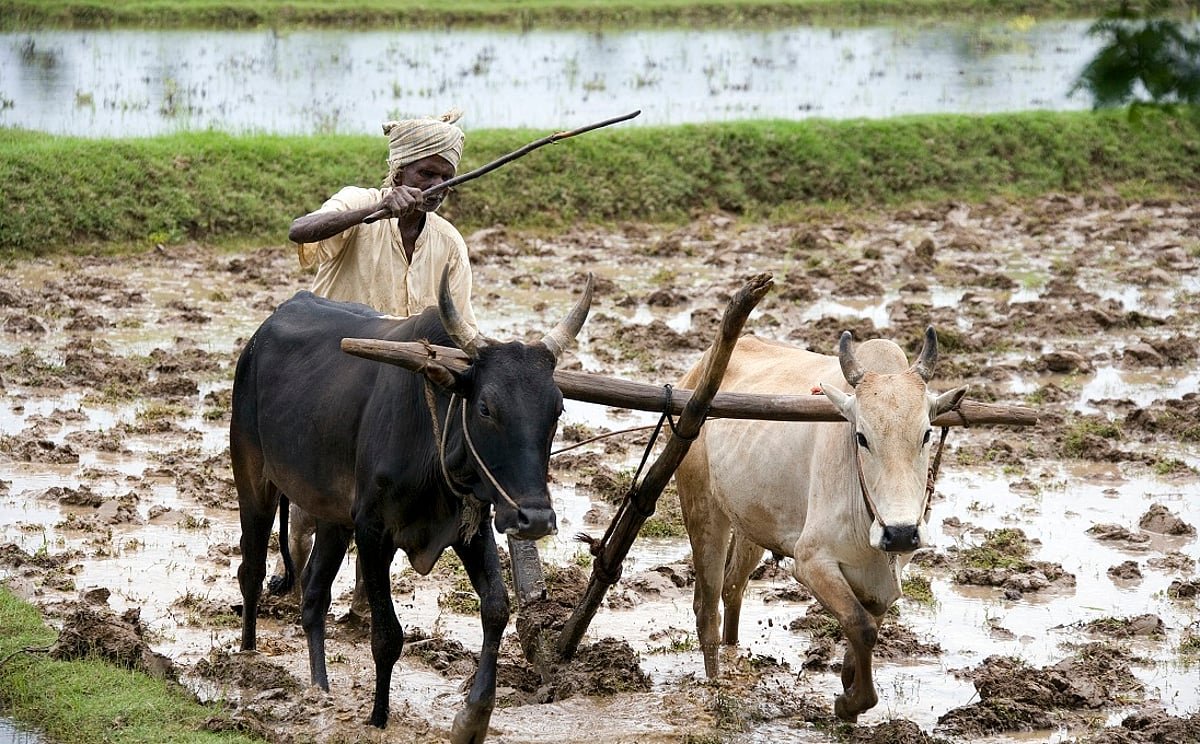
A farmer receiving a localised weather forecast through an affordable public platform gains better information for making decisions. But a large commercial platform possessing much richer information about crop conditions, farmer behaviour, local prices and future demand may acquire an informational advantage over the farmer. The same technology that reduces one information gap could create another.
This makes agricultural data particularly important. Indian agriculture is generating increasingly valuable data through land records, crop surveys, weather observations, satellite imagery, digital marketplaces, credit, insurance and government programmes. As AI systems become better at combining these datasets, questions of who controls, accesses and derives value from agricultural data will become increasingly important. These are not merely questions of digital governance. They are questions about economic rents and bargaining power.
India’s experience with digital public infrastructure provides an important starting point. Open and interoperable digital systems can lower entry barriers and prevent essential infrastructure from being controlled by a handful of players. A similar principle could guide agricultural AI.
The objective should therefore be to create an agricultural AI ecosystem, rather than merely an AI market. Publicly governed datasets, digital platforms that can communicate with one another, affordable computing, common standards and open interfaces could allow startups, universities, farmer organisations and state governments to develop applications without recreating the underlying infrastructure.
Farmer Producer Organisations, cooperatives and other agricultural institutions can also play a greater role. They can help small farmers access new technologies, share information and negotiate better terms. Collective action can make AI more affordable and strengthen farmers’ bargaining power as agricultural value chains become increasingly technology-driven.
This matters because Indian agriculture is dominated by small and marginal farmers. The economics of AI developed for a large commercial farm cannot simply be transferred to a small holding. The technology must work within the realities of fragmented holdings, variable connectivity, limited liquidity and diverse farming systems.
There is therefore a danger of creating an AI divide within agriculture. Better-capitalised farmers and commercial enterprises may adopt sophisticated technologies early, while smallholders remain dependent on conventional extension systems. Over time, differences in access to information could translate into differences in productivity, market access and income. The answer is not to slow technological adoption, but to ensure that it is accompanied by complementary investments. AI cannot substitute for irrigation, storage, affordable credit or rural roads. An accurate recommendation has little value if a farmer does not have the means to act upon it. The economic returns to agricultural AI will therefore depend heavily on the infrastructure and institutions surrounding it.
Agricultural extension will also need to evolve. AI could generate highly localised information while human professionals help farmers interpret it, assess trade-offs and act upon it. The human interface will remain important because agricultural decisions depend not only on information but also on resources, risk preferences and local circumstances.
AI systems also need to be evaluated carefully. Indian agriculture is extraordinarily diverse across crops, regions, soils, irrigation regimes and farming practices. A model that performs well in one agro-climatic zone may not perform equally well elsewhere. AI-generated advice must therefore be tested against actual farm outcomes. This points towards an important principle: measure impact at the farm level, not merely adoption at the platform level.
The relevant measures should include changes in yields, input costs, water use, crop losses, price realisation, income volatility and, ultimately, farmer incomes. The number of farmers registered on an AI platform is not an impact indicator.
Key takeaways
Looking towards 2047, India should therefore consider alternative AI-enabled agricultural futures. In one, AI becomes an inclusive productivity technology: public infrastructure keeps access affordable, farmer organisations strengthen bargaining power, and productivity gains translate into higher and more stable farm incomes. In another, a few platforms control data, market access and agricultural intelligence, while farmers capture a smaller share of the value created. A third possibility is a two-speed agricultural economy in which commercially viable farmers adopt AI rapidly while millions of smallholders remain outside the technological frontier.