
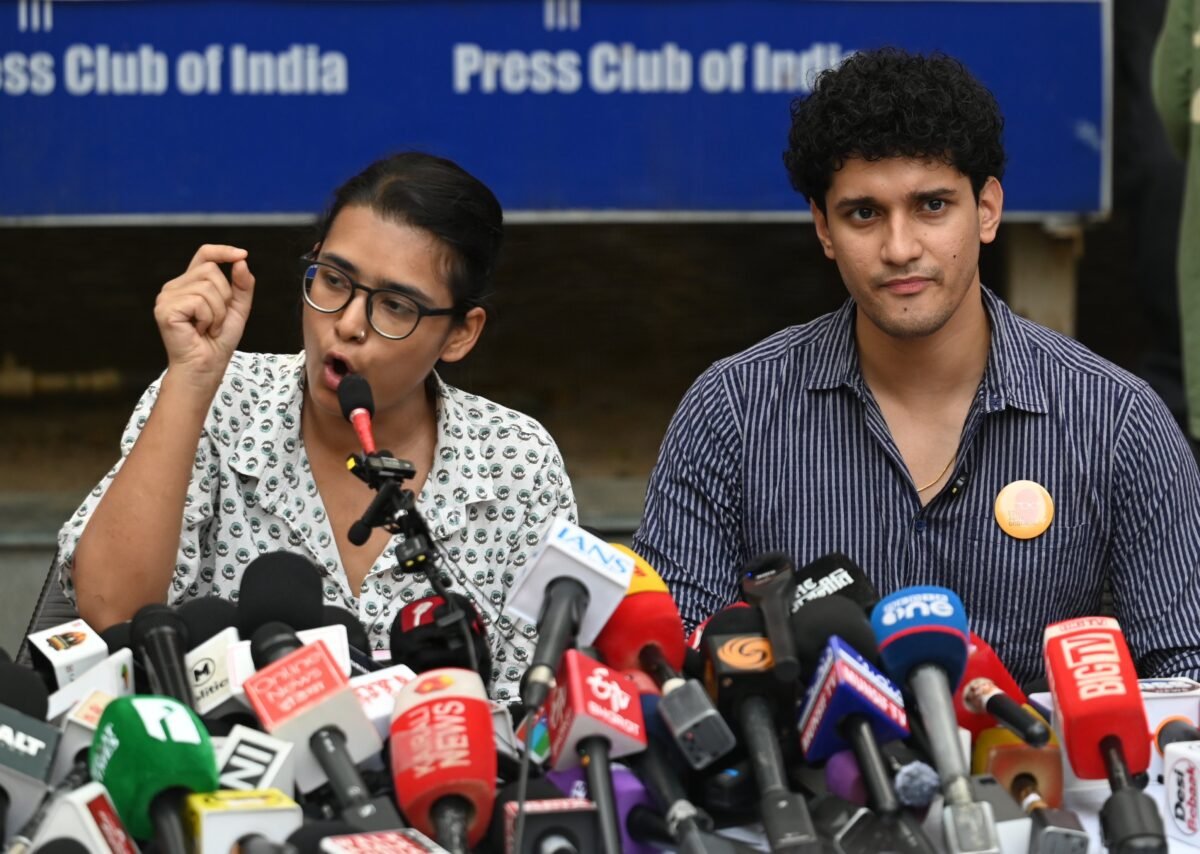
On 15 May 2026, Chief Justice of India Surya Kant likened unemployed youth to cockroaches, later clarifying that he meant those with fake degrees. His remark inspired the Cockroach Janta Party (CJP), a satirical take on the leading Bharatiya Janata Party (BJP). The CJP protested over exam leaks and successfully demanded then-education minister Dharmendra Pradhan’s resignation. It was neither the first major protest since 2018, nor the first addressing exam leaks, making its success in demanding accountability particularly notable.
The CJP’s protests were successful despite state repression through digital, physical and reputational means including internet shutdowns, biometric surveillance, suspension of the CJP’s Instagram and X accounts, baton charges and tear gas, water cannon and painting protesters as ‘anti-nationals’. The CJP’s success can be explained by contextual and tactical factors.
Contextually, the BJP came to power in 2014 on the promise of development and Hindu nationalism. Twelve years later, many young Indians increasingly question its record. The expected demographic dividend from the rising working-age population is yet to be delivered. Some 87 million young Indians are not in education, employment or training, nearly 40 per cent of graduates aged 15–25 are unemployed.
Demands for government jobs and seats in government colleges have been high, indicating a lack of job opportunities. Exam leaks have become common, the Indian National Congress claims that 152 exam leaks have taken place since 2026, with no convictions.
On 3 May 2026, over 2 million candidates sat India’s national medical entrance exam, only for it to be cancelled nine days later and rescheduled for 21 June because of an exam leak. More than 20 students who sat the exam died by suicide after news of the leak broke, with multiple parents blaming the government. These grievances gave the CJP an opening.
Tactically, the CJP first framed the issue as one of education and accountability, issues with broad appeal. Virality via social media, particularly Instagram, then helped it circumvent the negative narratives pushed by pro-establishment media houses. Its non-violence made it harder for the government to justify violent repression, while protesters increasingly used the protest sites as a space for humour. CJP leaders then distanced themselves from opposition parties, weakening allegations that they were ‘anti-national’. CJP founder Abhijeet Dipke, a Dalit man who faced casteist abuse online, admitted that it helps that he is not from a religious minority, as if he had been one, he might have been imprisoned early on.
The CJP distinguished itself from the youth movements that toppled governments in Bangladesh in 2024 and Nepal in 2025, noting that it intends to remain non-violent. After Pradhan was forced to resign on 25 July 2026, the CJP called off its protests and its members began a campaign to fix public schools across several Indian states. The CJP also widened its leadership to include more women and religious minorities.
In late August 2026, the CJP announced a 5 September protest over the government’s failure to deliver on its commitments to compensate the families of students who died by suicide and drop police cases against protesters. It called off the protest after the government stated that cases against protesters would be withdrawn.
After a CJP activist’s father was allegedly killed by BJP activists, the CJP demanded arrests and eight people were later detained. Likewise, the CJP’s protests over public schools in Rajasthan helped change state government policies. The BJP has since expanded its outreach to young Indians on Instagram and Reddit.
What should concern the BJP is not only the impact of the protests on its legitimacy but also on the protesters. Many first-time protesters took to the streets to openly criticise the government and Prime Minister Narendra Modi, something that has previously led to arrests.
People who protest once are very likely to protest again, something that can shape their identities — in this case, as members of ‘Gen Z’ who are not afraid to question the status quo. ‘Gen Alpha’ students across India have also since reportedly protested the poor quality of government schools. This cascading effect may normalise the criticism of the BJP and Modi.
More broadly, the CJP’s success has occurred alongside the rise of other student groups and leaders, enabling quick mobilisation for more recent grievances such as concerns of lack of free and fair elections and disenfranchisement of voters, which has seen nation-wide protests, broad support from opposition parties and youth groups including CJP and youth-wings of political parties.
While the electoral impact of this youth movement is uncertain, it offers hope, especially to younger generations, that democratic dissent can hold the powerful accountable, even if comes at the risk of repression.
Niranjan J. Nampoothiri is Researcher at the Institute of Development Studies, University of Sussex, England.