
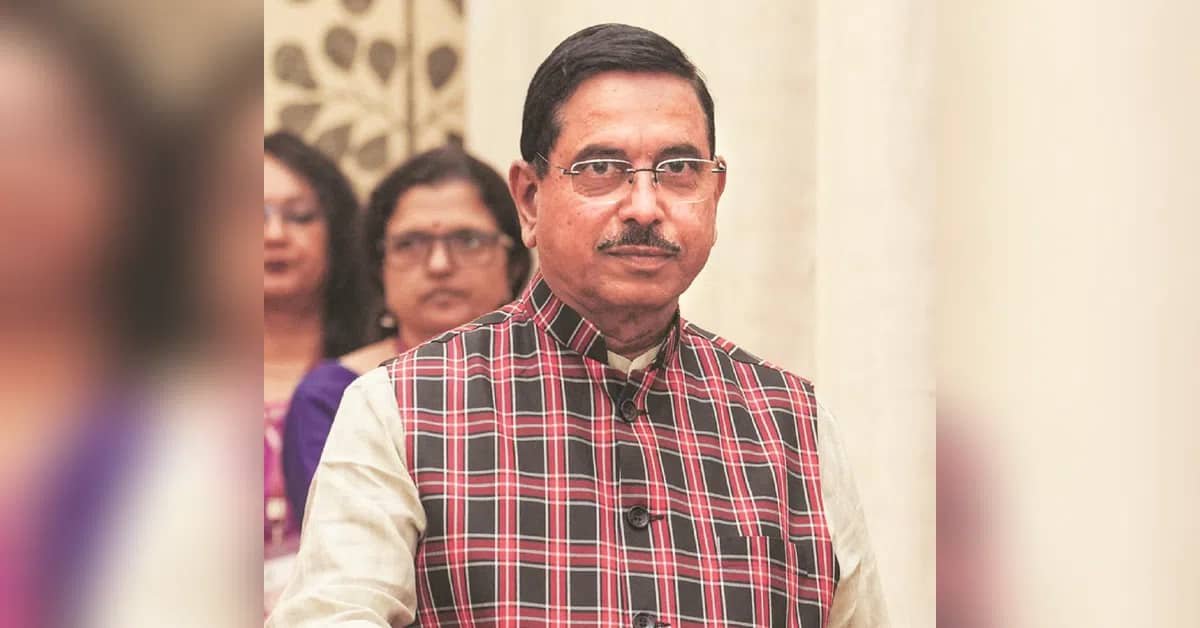
India has an opportunity to emerge as a preferred destination for international students, particularly those from the Global South, as several countries make it harder for foreign students to study abroad, Union Minister for Education Pralhad Joshi said on Friday.
Addressing the 21st FICCI Higher Education Summit, Joshi said India could leverage the changing global environment to attract students, while strengthening collaboration between universities and industry to improve the quality and relevance of higher education.
“At a time when several countries are making it harder for international students to study abroad, India has a real opportunity to become a preferred education destination, particularly for the students from the global south,” Joshi said.
The minister called on industry to go beyond recruitment and work with universities to design curricula, support researchers, offer apprenticeships and bring real-world industry problems into laboratories. He also said closer coordination between government, universities and industry would be essential to strengthening India’s education and innovation ecosystem.
“I ask the industry to go beyond the recruitment, work with universities to design curricula, support researchers, offer apprenticeships and bring real industry problems into our laboratories,” Joshi noted.
Building on Joshi’s remarks, Anandrao Patil, additional secretary in the Ministry of Education, said the country’s higher education system needed to adapt to a rapidly changing global environment shaped by tighter student visa rules, artificial intelligence (AI) and shifting supply chains.
“The world is changing on several fronts at once. Countries that once welcomed international students are tightening their doors. Artificial intelligence is changing what a graduate needs to know faster than any syllabus can be revised. The energy transition is creating industries that did not exist a decade ago. And supply chains for goods, for technology and for talent are being redrawn,” Patil noted.
He added that India had an opportunity to attract more international students as countries including the UK tightened student visa rules. He, however, cautioned that foreign universities setting up campuses in India should contribute to research and academic partnerships rather than operate primarily as teaching destinations.
Citing the United Kingdom (UK) as an example of the changing international education landscape, he said more than four in 10 universities in England expected to run a deficit in the current year amid financial pressures and a decline in international student arrivals.
Patil said the India-UK trade agreement, which came into force in July, had opened up opportunities in education services, with around 10 British universities expected to establish campuses in India.
Patil said implementation of higher education reforms was often slowed by the lack of clearly assigned responsibility within institutions, the burden of implementing multiple changes simultaneously and delays in communicating problems to the ministry. He said central universities were addressing these gaps by designating officers to oversee major reforms, sequencing changes rather than introducing them all at once, and reviewing data regularly instead of relying on annual reports.
Patil urged universities to break out of institutional silos by sharing underutilised laboratories, research facilities, faculty development programmes and digital platforms with other institutions, including state universities. He also asked universities to set aside at least 100 days a year to host school students, particularly from rural and tribal communities, giving them an opportunity to interact with faculty and university students and visit laboratories and libraries to improve their exposure to higher education..