
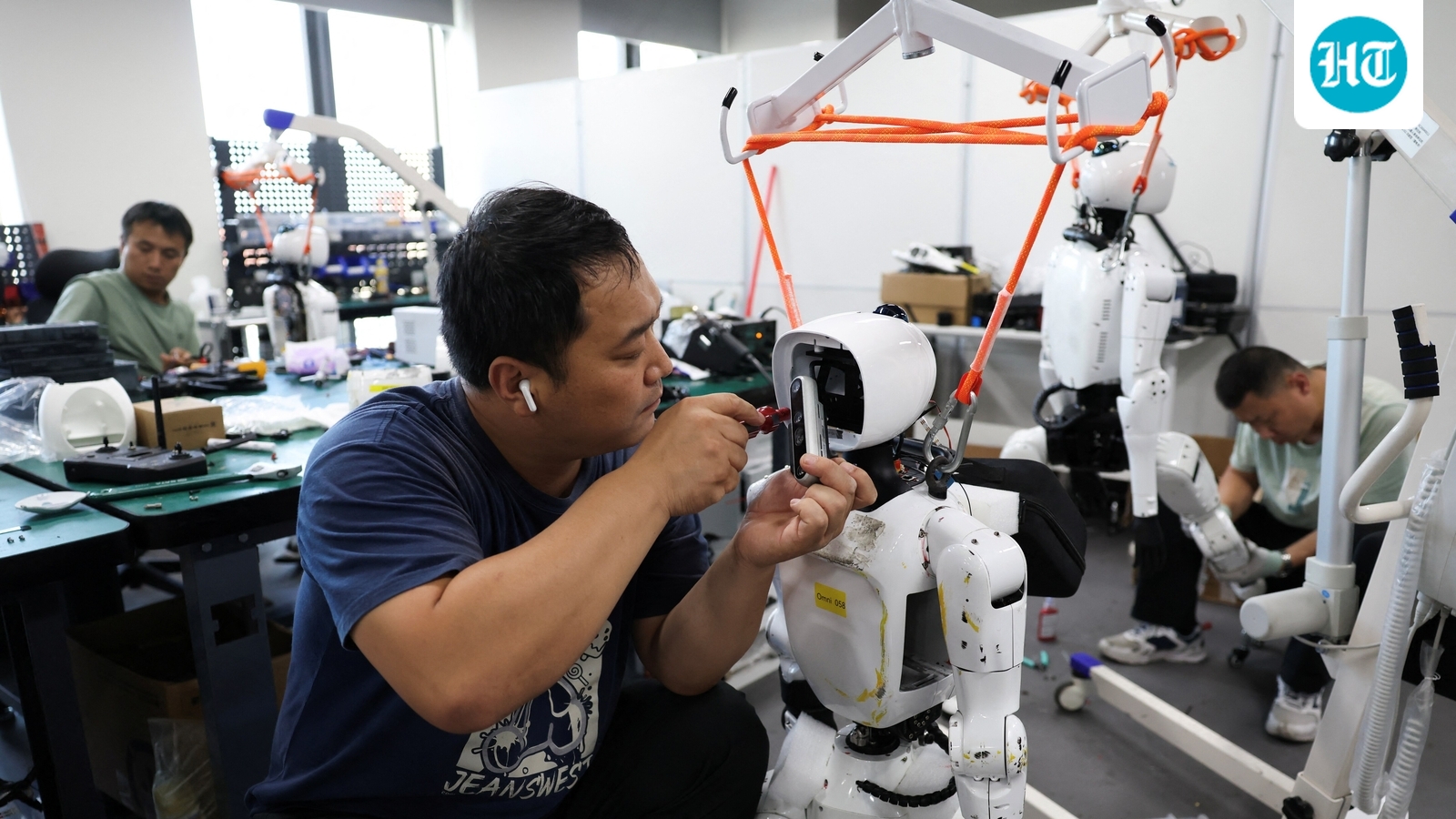
Engineers’ Day is celebrated every year on September 15 to mark the birth anniversary of Sir Mokshagundam Visvesvaraya, one of India’s greatest engineers, who is renowned for his pioneering contributions. The day is celebrated to acknowledge the contributions of the engineers in shaping the nation’s infrastructure and leading knowledge-driven innovation.
Now, as India moves towards its goal of becoming a developed nation by 2047, experts from industry and academia have stressed the need to rethink engineering education and prepare engineers for real-world challenges.
What industry leaders think of today’s engineering education
Prof. P. B. Venkataraman, Dean, Work Integrated Learning Programmes, BITS Pilani, said, “For too long, engineering education has treated theory and practice as sequential – learn first, apply later. The talent India needs for 2047 will require us to bring the two much closer together. The workplace must become an authentic learning space, where concepts encountered in the classroom are examined, applied and questioned in the context of real engineering problems. When learning and practice continuously inform each other, engineers develop more than knowledge, they develop the habit of translating knowledge into action. That capacity to connect what one knows with what a situation demands will be critical to building a developed India.”
Abhishek Misra, Head, Human Resources, Rockwell Automation India, said at the heart of every engineer lies the mindset of a maker, an innovator, and a problem-solver – one that has long created impact by solving real-world challenges through innovation, technology and design. Engineers have been at the forefront of building infrastructure, developing life-changing products, improving healthcare, strengthening communication, and enabling sustainable energy. Crafting solutions that make life safer, easier and more efficient. From clean water systems and transport networks to medical devices, they turn ideas into practical outcomes that drive economic growth and improve the quality of life for communities around the world.
At the same time, industry leaders said the definition of an engineering professional is changing rapidly. Arun Rajamani, Managing Director, South Asia, Cambridge University Press & Assessment, said future engineers will need to combine technical expertise with critical thinking, creativity, collaboration and ethical leadership. With technologies such as AI transforming industries, he said, adaptability and continuous learning will become as important as technical knowledge.
Teja Manakame, Vice President, Product and Engineering, Curriculum Associates India, highlighted India’s large STEM and technology talent base but said the country must strengthen its focus on deep technical expertise, AI fluency, domain knowledge and innovation.
She said, “India already commands nearly a third of the world’s STEM talent, we are home to 28% of the world’s STEM talent and nearly a quarter of its global software engineering workforce, and that scale gives us a real head start toward 2047. India is the hub to large technology workforce with over 5.4 million professionals, serving as a primary global hub for digital engineering, cloud architecture, and artificial intelligence. The future workforce needs to have a deep technical expertise, AI fluency, Innovative mindset and domain expertise. Research, Innovation, Patents and an ecosystem that support this are key for a nation to move to the next level.”
NTA aims to export Indian exam system as global ‘digital public good’: DG Abhishek Singh
Avni Malhotra, Deputy Director, The American Society of Mechanical Engineers (ASME) Foundation India, similarly said India must move beyond simply producing more engineering graduates.
She further added, “As technologies evolve and industries transform, success will depend on how effectively we equip engineers to innovate, lead, and create solutions that address national priorities. India’s journey to becoming a developed nation will ultimately be shaped not only by the infrastructure and technologies we build, but by the talent we nurture to build them.”
So, according to industry leaders, as industries undergo rapid technological and structural changes, engineering education will need to evolve alongside them, creating professionals who can innovate, collaborate and build solutions aligned with India’s development priorities.
Happy Engineers’ Day!