
Ishan Kishan explained how he switches from long-format cricket to T20s within days, stressing quick adaptation, a calm mindset and understanding his role during partnerships with teammates.

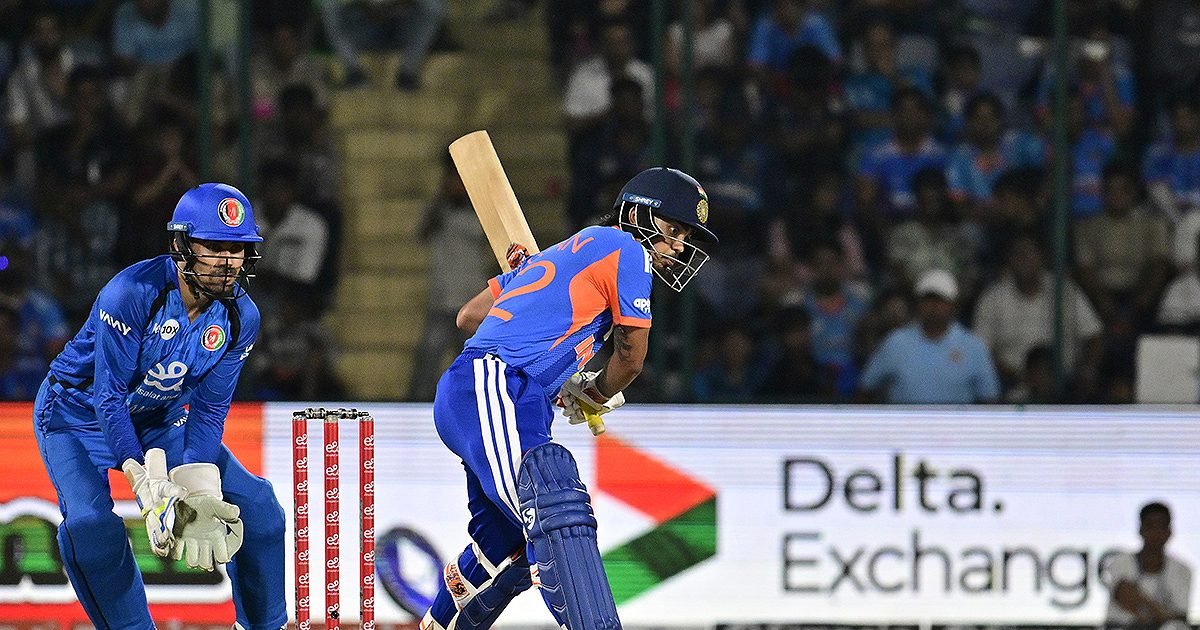
IMAGE: Ishan Kishan stroked a 33-ball 42 laced with five boundaries and a six in India’s T20I series opener against Afghanistan in New Delhi on Sunday, September 13, 2026. Photograph: ANI Photo
Key Points
- Ishan Kishan switched from a marathon Duleep Trophy campaign to T20 cricket within days, scoring 42 as India comfortably beat Afghanistan in New Delhi.
- Kishan played the supporting role in a 121-run stand with Abhishek Sharma, who smashed 82 off 32 balls to power India’s chase.
- The batter said adapting quickly, staying calm and understanding his role are crucial when moving between formats.
- Kishan also relies on video analysis and discussions with friends to identify mistakes and improve his T20 game.
In-form India batter Ishan Kishan admitted that switching between the longest and shortest formats within days requires a quick change of mindset, but said adaptability is essential for a modern multi-format cricketer.
Just days after leading East Zone to the Duleep Trophy title with scores of 270 and 80, Kishan returned to T20 cricket and scored a composed 42 off 33 balls in India’s comfortable eight-wicket win over Afghanistan in the first T20I in New Delhi on Sunday, September 13, 2026.
Kishan shared a 121-run second-wicket stand with Abhishek Sharma, who smashed 82 off 32 balls, as India chased down the target of 157 in just 13.4 overs.
“Whenever the format changes, we just have to adapt as soon as possible. We need to get into that zone again and again because this is not the first time we are doing this,” Kishan said in a BCCI video.
He said staying calm at the crease is key while moving between formats, adding that players regularly make such transitions through international cricket, domestic competitions and the IPL.
• India Look To Seal T20I Series Despite Bowling Concerns
Ishan Explains Supporting Abhishek
Kishan also explained why he took a more measured approach against Afghanistan. With Abhishek attacking from the other end, he chose to support his partner rather than match his aggression.
“I think I played a one-day innings today because Abhishek was there and he was playing good shots. I wanted him to have that momentum and keep going,” Kishan said.
He added that his role could change depending on the situation. If Abhishek is not striking the ball well, Kishan said he would take on the attacking role himself.
The wicketkeeper-batter stressed that understanding one’s role is central to successful partnerships. He also acknowledged that getting fully accustomed to T20 cricket after a long-format game can take time.
Calm Approach Drive Improvement
Kishan said he works on his game by studying bowlers, watching videos and discussing his batting with friends. The focus, he said, is on identifying mistakes and improving from one match to the next.
His numbers underline his impact in T20 cricket. Kishan has amassed 854 T20I runs in 24 innings at an average of 35.58 and a strike rate of 173.57, including one century and six fifties.
Across T20 cricket this year, he has tallied 1,456 runs in 39 matches at an average of 37.33 and a strike rate above 177, with one century and 12 fifties.
Against Afghanistan, Arshdeep Singh starred with the ball, taking 3/19 as India restricted the visitors to 156/8.
Azmatullah Omarzai remained unbeaten on 64, but Abhishek and Kishan quickly ended Afghanistan’s hopes with their century stand.