
~ Study spans government and private schools across CBSE, ICSE, state and international boards to assess AI’s role in teaching and learning
New Delhi, 21 September 2026: AI Ready School (AIRS), an AI ecosystem for K–12 education, has launched a national research programme to study how Artificial Intelligence is shaping teaching and learning in Indian schools. Led by AIRS Research, AIRS’s newly formed research division, the study is guided by an advisory panel that includes education-policy voices such as Janajit Ray. Currently underway across multiple states, boards and school settings, the research focuses on how AI can support students and teachers in the classroom.
As schools work to strengthen students’ skills and prepare them for the future, teachers and school leaders are navigating a fast-expanding EdTech landscape, with AI-based tools, evolving government guidance and mounting claims about impact. This has created a growing need for clarity on what improves learning, how students respond to technology and how teachers can use it effectively. The research looks beyond academic scores to examine learning, reasoning, engagement and confidence, while exploring how teachers can identify learning gaps and better understand students’ individual strengths and areas of interest.
Speaking about this initiative, Chiranjeevi Maddala, Co-founder & CEO, AI Ready School, said, “The early results from our classroom pilots show that the impact of AI needs to be understood beyond marks alone. The larger question is how students learn, reason, engage and build confidence, and how teachers can use technology to respond to individual learning needs. This national study will help us build that evidence from real classrooms across India, rather than relying on any one pilot or platform’s own claims.”
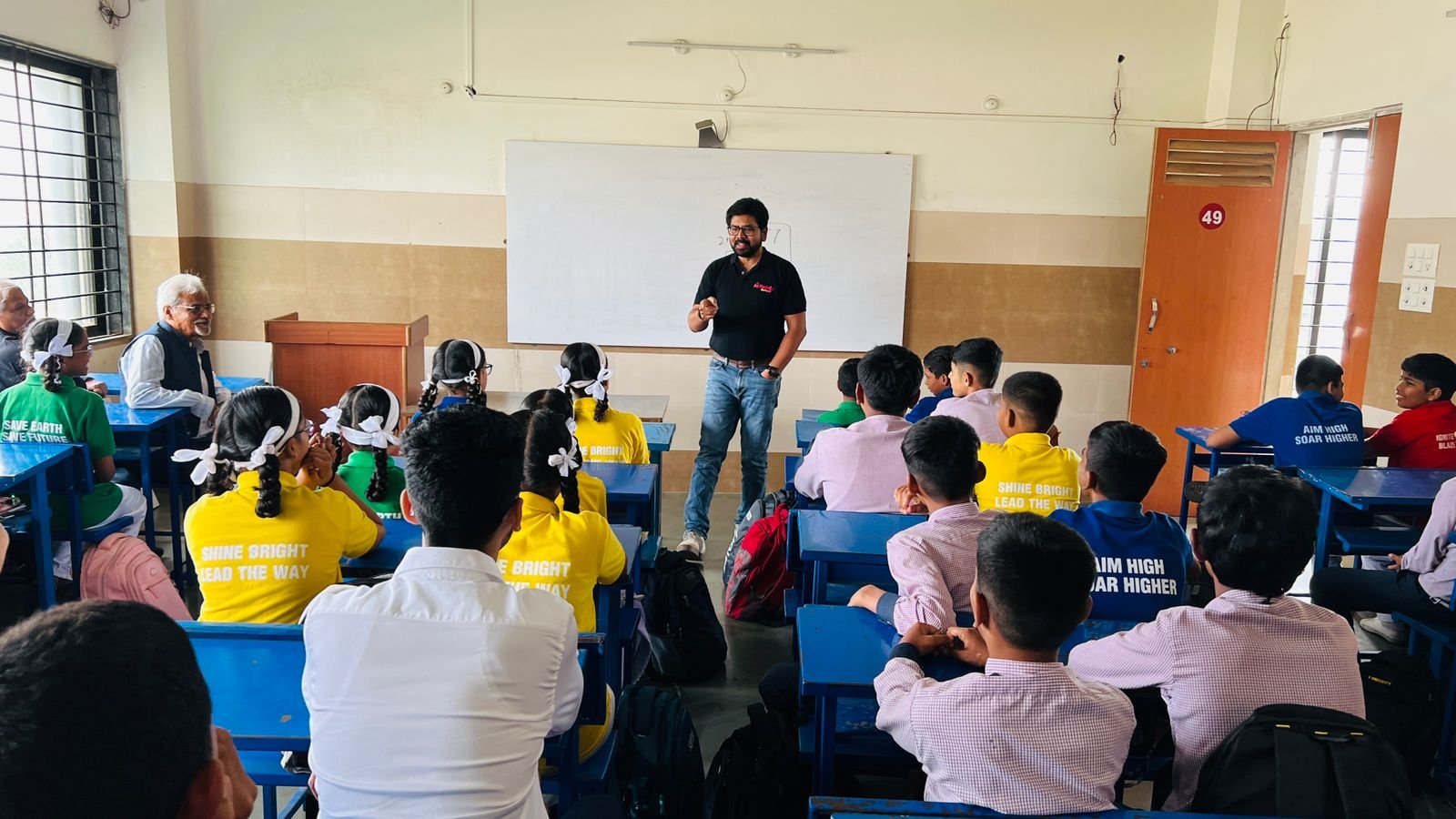
The research includes 100 schools across India, covering government and private schools, urban and rural settings, and CBSE, ICSE, state and international boards. Each participating school takes part in a focused three-day programme involving one class and one subject, designed to cause minimal disruption to the school’s regular routine. Students complete assessments before and after the AI-supported learning experience, while teachers and students share feedback on the classroom experience. Individual student results are kept confidential and anonymised, while schools are identified in published research only with explicit consent.
The national programme builds on classroom pilots previously conducted by AIRS. At The Indian Public School (TIPS), Dehradun, a pilot with 20 Grade 8 students saw average class scores rise from 49% to 70%, a 21-percentage-point improvement. Fifteen of the 20 students improved their scores, while self-reported reasoning confidence rose from 30 to 55 out of 100 on a post-pilot student survey.
In the same pilot, 88% of students rated the AI-supported lesson more engaging than a regular class, and 94% reported greater confidence in the subject. The platform also helped teachers identify misconceptions around antibiotics, malaria, disease vectors and chronic disease, allowing more targeted follow-up. Participating teachers rated their overall experience 5 out of 5, reported saving under 30 minutes of preparation time per lesson, and found the AI-generated interventions useful.
At NH Goel World School, Raipur, where AIRS’s engagement began in 2022 and has since been renewed five times, school feedback has highlighted improvements in students’ research skills, analytical thinking, problem-solving, innovation and presentation confidence, alongside increased teacher adoption of AI-supported classroom practices. Similarly, at Meru International School, Hyderabad, AIRS has worked for one and a half years, supporting its Cambridge and CBSE curricula with AI-powered learning.
Janajit Ray, Advisory Panel, AIRS Research, said, “AI is an amazing tool. Educational institutions should adopt new technologies and see how they can help children learn better. I can clearly see that AI is a transformational tool, but it has to be used in the right way. That’s why a study like this is very important, and I’d suggest every progressive school take part in it.”
AIRS Research will publish the final national report at an exclusive launch event in Delhi in January 2027, to which all 100 participating schools will be invited. The findings will contribute to an India-specific evidence base on AI in K–12 education, offering school leaders, teachers and policymakers a clearer, independently structured picture of where AI adds value to teaching and learning, and where it does not.
About AI Ready School
AI Ready School is an AI-powered platform for K–12 schools offering an integrated ecosystem for teaching, learning, student development and school operations. Designed to help schools adopt AI through a single unified system rather than multiple standalone tools, the platform delivers personalised learning experiences tailored to each student’s pace, level and learning needs. It supports structured learning through guided instruction, continuous assessment and teacher-led classroom management, while helping educators streamline lesson creation and improve student outcomes in critical thinking, reasoning, analysis and problem-solving. AI Ready School is headquartered in Hyderabad, India, and currently works with schools across India.