

New Delhi:
India has managed to bring women closer to men in education, but that progress is not showing up in the same way in jobs, income or decision-making. The World Economic Forum’s Global Gender Gap Report 2026 shows a wide difference across the four areas used to measure gender parity.
India has closed 64.5 per cent of its overall gender gap, leaving it at 131st among 145 economies. Its overall score has improved by 4.3 percentage points since 2006, with much of the long-term improvement coming from education.
India is also behind several of its South Asian neighbours in the overall ranking. Bangladesh leads the region at 79th globally, followed by Maldives at 90th and Bhutan at 121st.
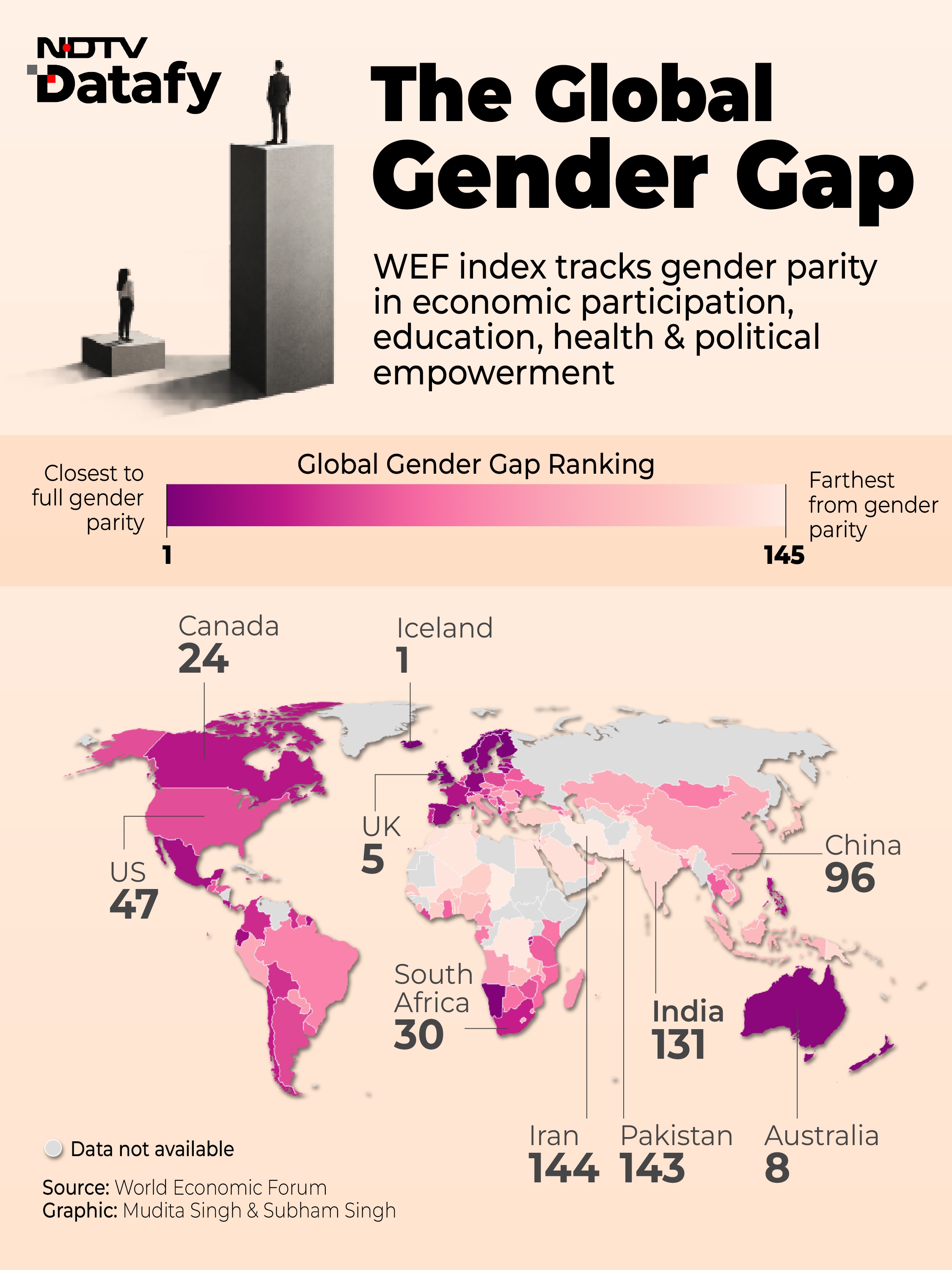
Sri Lanka, ranked 129th, is just ahead of India. Nepal and Pakistan rank lower, at 138th and 143rd, respectively.
For India, the biggest gap appears in Economic Participation and Opportunity, where India has ranked 143rd. The score has improved only 0.5 percentage points from the previous year and remains below its 2013 level.
Some indicators within this area have improved over time. Parity among professional and technical workers has risen from 26.6 per cent in 2006 to 49.9 per cent in 2026.
The share of women among legislators, senior officials and managers has also improved by 10 percentage points since 2006. Labour-force participation parity is at 44.1 per cent.
A higher percentage means a smaller gender gap, while a lower percentage indicates a wider gender gap.
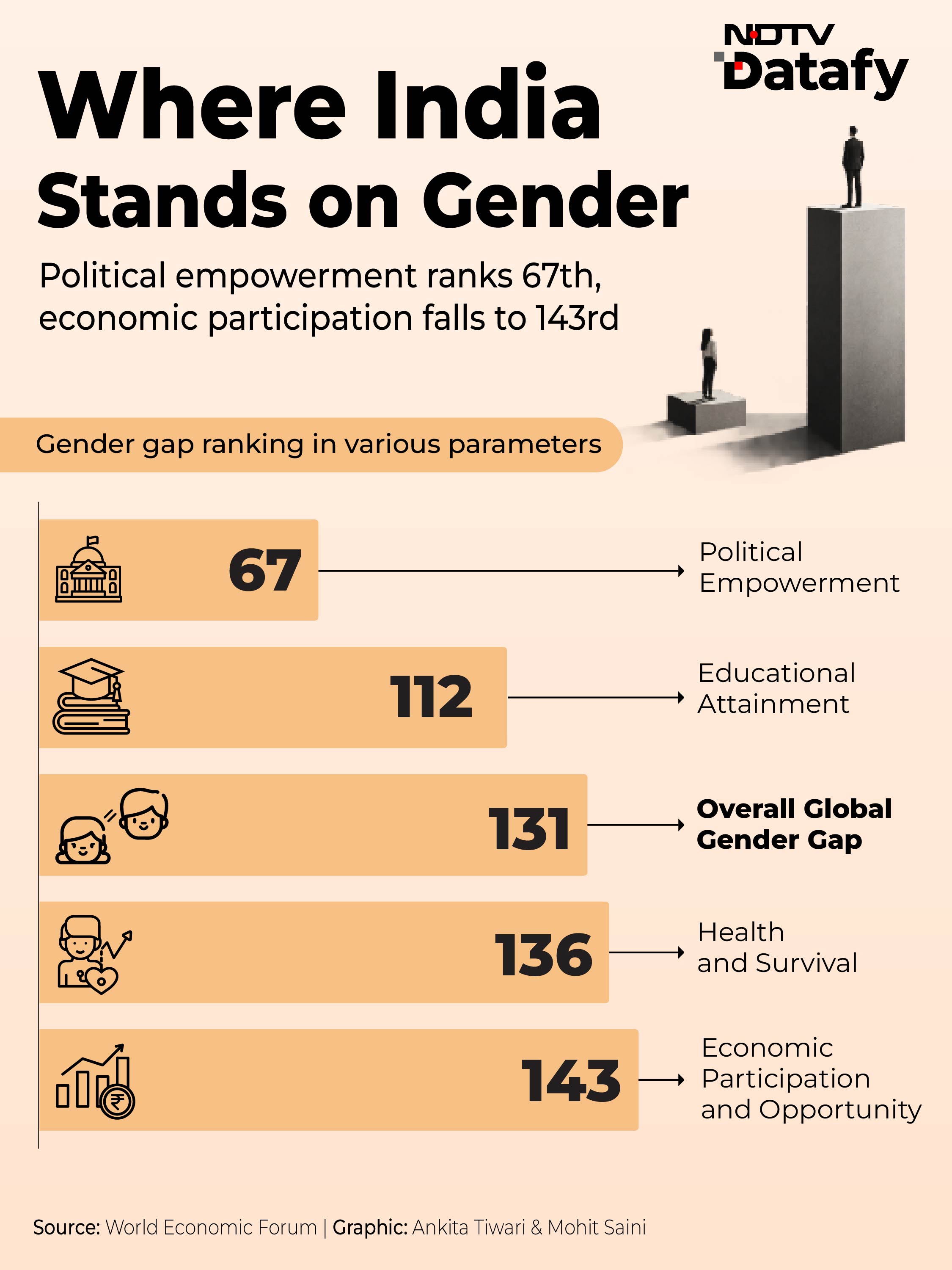
Education presents a very different picture. India has closed 96.6 per cent of the gender gap in Educational Attainment, with the subindex ranked 112th.
The country has achieved full parity in secondary and tertiary enrolment.
In Health and Survival, India ranked 136th. The report says the score has followed an upward trend since 2017, although the sex ratio at birth remains nearly one percentage point below its 2006 level.
Political Empowerment is India’s highest-ranked subindex, at 67th. However, progress has been uneven. According to the report, “The gender gap in parliament is 16.1 per cent closed, while the figure for ministerial positions is 5.9 per cent. The head-of-state indicator, which looks at female and male leadership over the past 50 years, stands at 40.7 per cent.”
India has moved much closer to gender parity in education, while women’s participation in the economy and political decision-making remains much further behind.