
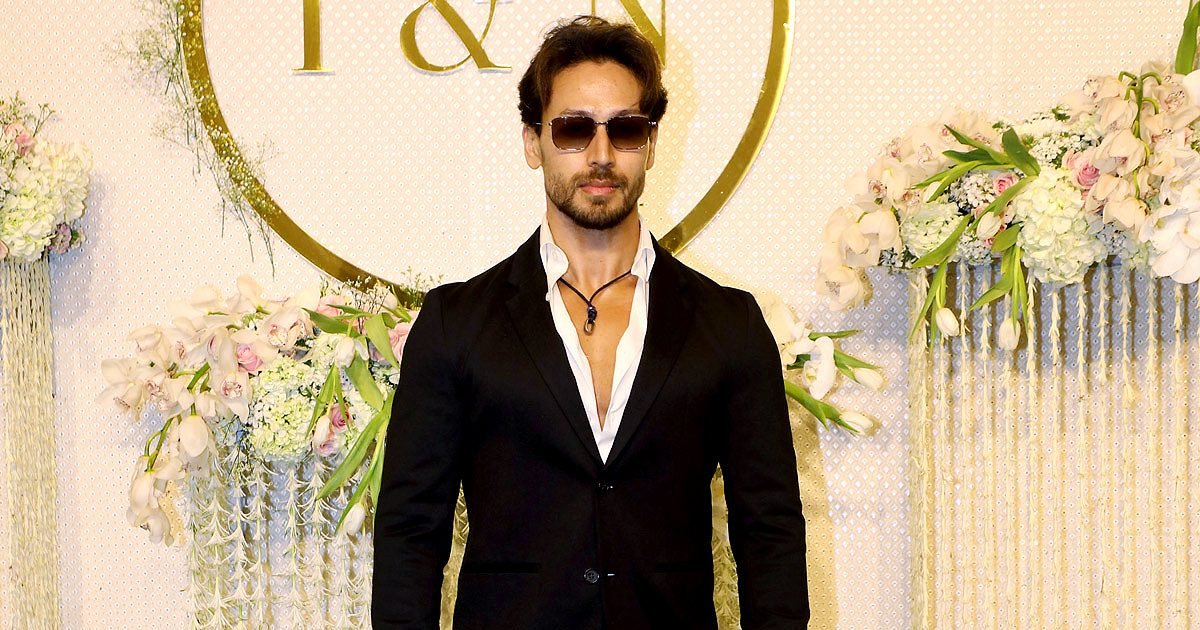
Sunday’s shooting incidens targeting Tiger Shroff, have rekindled memories of the Hindi film industry’s dark past, when crime syndicates like Dawood Ibrahim’s D-Company and Abu Salem’s gang exerted significant influence through extortion, violence and money laundering.

IMAGE: Tiger Shroff. Photograph: ANI Photo
Key Points
- Bollywood has a long history of entanglement with organised crime, dating back to the 1980s and 1990s, marked by extortion, violence and money laundering.
- High-profile incidents include the 1997 murder of music mogul Gulshan Kumar and attempts on the lives of filmmakers Rakesh Roshan and Rajiv Rai.
- Recent incidents, such as the shooting outside Salman Khan’s residence and threats to other stars, indicate a resurgence of underworld targeting by new criminals like the Lawrence Bishnoi gang.
The famous scene in The Godfather (1972), in which a Hollywood producer wakes up to find the severed head of his prized racehorse in his bed, as punishment for refusing to cast Don Corleone’s godson in his film, was a piece of cinematic excess.
But years later, with the rise of organised crime in Mumbai, the film industry was forced to give the underworld a seat at its table — interference in casting, money laundering, extortion.
When the most dreaded gangsters snapped their fingers, top stars danced at their parties, entertained them on their sets, and boasted of ‘connections’.
Sunday’s shooting at Tiger Shroff must have brought to the industry, memories of those dark days in the 1980s and 1990s, when the underworld had spread its poisoned tentacles into Bollywood.
A History Of Violence And Extortion

IMAGE: Sanjay Dutt steps out of Yerwada jail in Pune. Photograph: Pradeep Bandekar/Rediff Archives
The brazen killing of Gulshan Kumar (1997), music baron and founder of T-Series, had sent shock waves through the city. Sixteen bullets were pumped into him, in a murder orchestrated by the underworld.
Investigators later revealed that Kumar had refused to bow down to extortion demands and pay protection money, and had declined to sell audio/video rights of his label’s music albums to underworld-backed front companies. His murder sent shock waves through Bollywood, that had believed that their wealth and proximity to power insulated them from crime.
Before this, following the 1993 serial Bombay blasts, Sanjay Dutt was arrested under the Terrorist and Disruptive Activities (Prevention) Act (TADA) for illegally possessing weapons acquired from members of the D-Company syndicate. His trial and subsequent conviction became a cause celebre of the times.
Filmmaker Mukesh Duggal (Gopi Kishan) was shot dead in 1997, right outside his office. It was alleged that financial disputes and links to rival gangs were the cause.
Rakesh Roshan Sustained Bullet Injuries

IMAGE: Hrithik Roshan and his father Rakesh Roshan. Photograph: Kind courtesy Rakesh Roshan/Instagram
In 1997, Rajiv Rai was exiting his office when shooters linked to Abu Salem’s gang opened fire on him. Rai survived only because he had been assigned police bodyguards due to earlier extortion threats. Following the attack, Rai temporarily left the country under police protection.
On January 21, 2000, soon after the success of Kaho Naa… Pyaar Hai, two unidentified gunmen opened fire on Rakesh Roshan outside his office. He sustained bullet injuries, but survived. This attack was allegedly tied to extortion demands by the Abu Salem gang, who wanted a cut of the film’s overseas profits.
Film producer Manmohan Shetty was targeted by the underworld during the peak wave of industry extortion and violence. In 1999, an associate of gangster Abu Salem attempted to assassinate Shetty.
In this period, filmmakers like Subhash Ghai and Boney Kapoor were also targeted. Kapoor was shot at in his office by Abu Salem’s gang members in the mid-1990s for overseas distribution rights for Judwaa.
Ghai faced extortion threats and warnings, prompting the Maharashtra government to provide police protection to several film personalities of the time.
Underworld’s Financial Grip

IMAGE: Monica Bedi. Photograph: Kind courtesy Monica Bedi/Instagram
The beginnings of this insertion of the underworld into films can be traced to the time before 2000 when the government had not granted cinema ‘industry status’, so banks and financial institutions were legally barred from funding movies.
Producers had to rely on private financiers, and often the ones with funds to spare — and launder — were gangsters operating out of Dubai and Karachi like Dawood Ibrahim, Chhota Rajan, and Abu Salem.
Successful producers, directors, and actors were forced to function with the threats of gangs hanging over their heads. Refusal to pay protection money or cast specific actors often resulted in violent consequences, including high-profile assassination attempts.
In the late 1980s and 1990s, Bollywood stars were regularly flown to the Middle East to perform at stage shows or attend cricket matches, often hosted or funded by gangsters. Photographs of actors with notorious criminals damaged the industry’s public image.
Actresses were frequently linked romantically to powerful mob bosses, leading to gossip and controversies.
Actress Monica Bedi was allegedly married to Abu Salem, and was arrested with him, in Portugal.
The Resurgence Of Threats

IMAGE: Disha Patani. Photograph: Kind courtesy Disha Patani/Instagram
With more stringent police action, and a restructuring of the industry, the stranglehold of the underworld loosened. The entry of corporate studios like Yash Raj Films, Dharma Productions, Red Chillies, Reliance and international companies like Disney, brought transparency, legal contracts, and institutional banking into film production, cutting off dependence on shady financiers.
The film industry seemed to be functioning without external threats of violence, when newer crime syndicates like the Lawrence Bishnoi gang, started to target Bollywood figures through drive-by shootings and intimidation tactics.
The gang claimed responsibility for the 2024 murder of politician Baba Siddiqui, who had many friends in the film industry.
The same year, two motorcycle-riding shooters opened multiple rounds of gunfire outside Salman Khan’s residence in Bandra, north west Mumbai.
Filmmaker Rohit Shetty’s home in Juhu, north west Mumbai, was targeted in a firing incident this year, aimed at creating panic and enforcing extortion demands.
There was gunfire directed at the family home of Disha Patani. Reportedly stars like Shah Rukh Khan, Aamir Khan, Ranveer Singh have received threats. Today, most top stars are given police protection or they are accompanied by bodyguards. The price of fame, or are they pawns in a bigger game of money, power and reflected glamour?
Photographs curated by Manisha Kotian/Rediff