
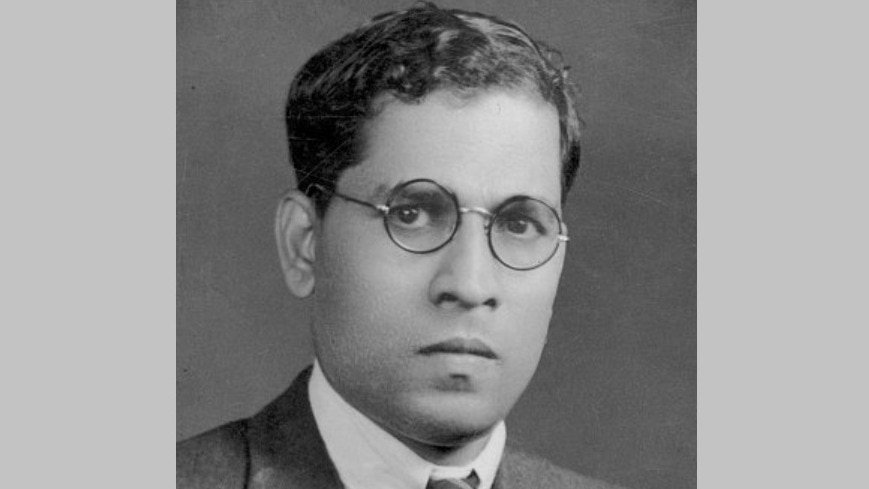
If one had walked along the roads of Sadashivanagar in Bengaluru in the latter part of the 20th century, one might have passed an elderly professor on his way to the Indian Institute of Science. To those who knew him merely as a retired academic, he may have appeared to be no more than a quiet resident of the neighbourhood. Yet this was Rappal Sangameswara Krishnan, a physicist who had worked under CV Raman at the Indian Institute of Science, spent the war years at Cambridge’s Cavendish Laboratory, and later succeeded Raman as head of the Physics Department at IISc.
In an age in which digital presence has brought us closer, we tend to remember forgotten great minds who, in some measure or to a greater extent, have contributed to the development of science. R Krishna is one such name, who began trending after the truth about his life and work was brought to light on social media.
A HUMBLE BEGINNING, EARLY AGE RESEMBLANCE TO SCIENCES
Krishnan was born near Palghat, Kerala, on September 22, 1911. After his schooling, he joined St Joseph’s College, Tiruchirappalli, where he stood first in the University in the BA Honours examination.
In 1933, he went to the Indian Institute of Science in Bengaluru as a research scholar under CV Raman, who had established the Institute’s Department of Physics that year. Krishnan’s early work was concerned with the scattering of light.
It was in this work that he made the observation which later became known as the Krishnan Effect.
While studying light scattered by colloidal systems, Krishnan examined the relation between different polarisation components of the scattered light.
He found a reciprocity between two of these components: the intensity observed when the incident and scattered polarisation directions were interchanged remained the same. The result was reported in his work on light scattering in the 1930s.
The observation became part of the study of light scattering in colloids, liquids and glasses. The subsequent theoretical treatment of the effect was developed by Hans Mueller, who accounted for Krishnan’s experimental observations.
THE DAYS AT CAMBRIDGE
Krishnan’s career then took him beyond Bengaluru. In 1938, he received the 1851 Exhibition Overseas Scholarship for research in nuclear physics and went to the Cavendish Laboratory at Cambridge to work under Sir John Cockcroft.
There he worked with the laboratory’s cyclotron on nuclear transformations produced by deuterons. When the Second World War began and several members of the laboratory staff left for war-related work, Krishnan took responsibility for keeping the cyclotron and the associated research running.
Cockcroft later described him as the best experimental physicist from India to have worked at the Cavendish Laboratory during his fifteen years there.
At Cambridge, Krishnan also worked on deuteron-induced transformations in heavy elements. His research included experiments involving uranium and thorium, and papers on the subject appeared in Nature and the Proceedings of the Royal Society.
He returned to India in 1941 and rejoined the Physics Department at IISc. When Raman retired from the Institute in 1948, Krishnan succeeded him as Head of the Department. He remained in that position until 1973.
THE JOURNEY AT IISc
The department he inherited had been closely associated with light scattering and the Raman Effect. Krishnan sought to widen its research. Under his leadership, work expanded into solid-state physics, including the elastic and thermal properties of crystals, photoelasticity, X-ray diffraction, and Raman and infrared spectroscopy.
Research was also initiated in areas including nuclear geochronology, ultrasonics, nuclear magnetic resonance and electron paramagnetic resonance.
The Indian National Science Academy’s biographical memoir records that, during his twenty-five years of stewardship, the department developed into a leading centre for research in condensed-matter physics.
His experimental work continued alongside this institutional responsibility. In studies of Brillouin scattering, Krishnan used the 2536 Ã line of mercury to overcome the difficulty of detecting weak scattered components.
The method enabled him to record Brillouin scattering in diamond, fused quartz and alkali halides at a time when the laser had not yet entered scientific laboratories. The theory of Brillouin scattering in these systems was subsequently developed by V. Chandrasekharan and Krishnan.
Krishnan had also hoped to expand nuclear-physics research at IISc. In 1945, he proposed the development of a cyclotron, an electrostatic accelerator and an isotope separator.
The proposal was considered by a committee that included H. J. Bhabha and H. J. Taylor, but it was not accepted. Krishnan therefore continued his work in spectroscopy and solid-state physics.
In 1973, after his retirement from IISc, Krishnan became Vice-Chancellor of the University of Kerala, a position he held until 1977. He later remained associated with scientific work in Bengaluru.
From 1977, he worked as a retired scientist at IISc on a source book of Raman Effect data, a project supported by the Department of Science and Technology. He later served as a visiting scientist at the National Aeronautical Laboratory and became an Emeritus Scientist of the CSIR.
Krishnan died in Bengaluru on October 2, 1999, at the age of 88. His career had taken him from Raman’s laboratory at IISc to the Cavendish Laboratory and back to Bengaluru, where he spent twenty-five years directing the work of the Physics Department.
His name remains attached to an experimental relation in light scattering. But his contribution to Indian science was not confined to a single observation. He inherited a department shaped by Raman and expanded its work into new areas of physics.
In doing so, he became one of the scientists through whom IISc moved from the era of Raman’s early experiments towards a broader programme of modern physics.
– Ends