
‘When you’re young, everything affects you. A few years later, you understand the politics of it but when you’re young and talented, and you want to reach all of pinnacles and peaks, every single film matters to you.’
‘Every film is a Mount Everest that you want to before anyone else.’
‘Then after sometime, you’re not in that heroine bracket anymore, so it doesn’t matter anymore.’
Key Points
- Mita Vashisht resisted her debut role in Yash Chopra’s Chandni as it wasn’t a lead, but was too polite to refuse.
- She experienced significant heartbreak when her roles were drastically cut in films like Dil Se.. and Rudaali, often to favour lead actors for awards.
- She notes that even today, supporting performances are sometimes not sent for award consideration if a big star isn’t also receiving an award.
There are several sides to Mita Vashisht.
She says it like it is, without mincing words. She doesn’t even shy away from taking names.
She’s also extremely warm and friendly. She made sure to shake the hand of every staffer in the Rediff newsroom, after patiently answering everyone’s curious questions about showbiz, when she arrived for The Rediff Podcast.
And what an interview it was!
Mita opened up about her career, from her early leading roles in Mani Kaul’s art films, followed by her mainstream debut in Yash Chopra’s Chandni.
“I actually resisted doing Chandni because I wanted to do lead roles and this wasn’t one. And then I was too polite to say no to Yash Chopra,” Mita looks back at her post-NSD days.
“Then I would go to Yashji and ask, but what’s my role?”
She never did get her answer, but her very first scene in the film was next to a radiant Sridevi, dancing to Mere Haathon Main Nau Nau Choodiyaan.
‘Raakheeji said she’s going to sue the director because she was given another narration for Rudaali‘

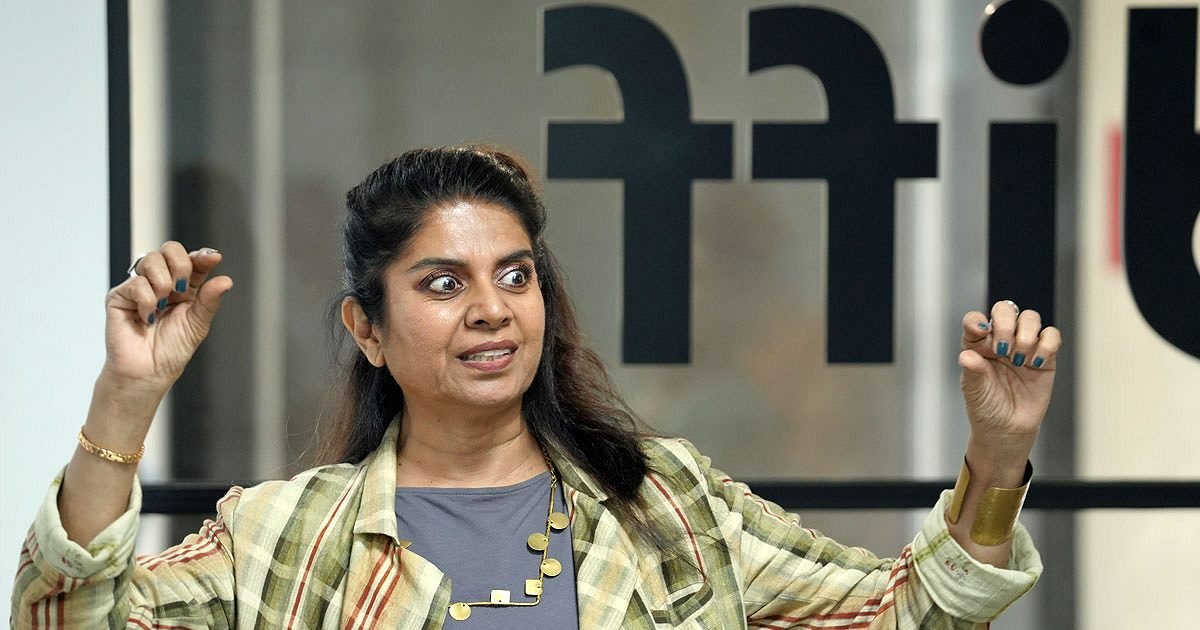
IMAGE: Mita Vashisht. Photograph: Rajesh Karkera/ Rediff
While Mita featured in some of Bollywood’s big hits, she went through her share of heartbreaks when her roles were slashed — from a six-minute fight scene with Shah Rukh Khan in Dil Se.. to chunks of her scenes in Kalpana Lajmi’s Rudaali.
“You go to the dubbing studio to dub for the film, and you see the beginning of the scene and then the end of the scene. So you turn around and ask the director, Kalpana Lajmi, is the rest of the scene in another loop? And there’s silence,” Mita tells Ronjita Kulkarni/Rediff.
“It was very clear that that year, she wanted the lead actress (Dimple Kapadia) to get the National Award for the film. So any other female performance, if they are powerful enough, will not be allowed to exist. I remember getting a call from a senior journalist, saying that Raakheeji (who also starred in the film) is going to call you because her role has been chopped.
“She’s going to sue the director because she was given another narration, and she’s going to ask you if your role was chopped too. This is how things would be engineered, so you would feel your heartbreak many, many, many times in those days.
“When you’re young, everything affects you. A few years later, you understand the politics of it but when you’re young and talented, and you want to reach all of pinnacles and peaks, every single film matters to you. Every film is a Mount Everest that you want to climb before anyone else.
“Then after sometime, you’re not in that heroine bracket anymore, so it doesn’t matter anymore.”
‘What if the world had known about my award at that time? Would things have been a little different?’

IMAGE: Mita Vashisht. Photograph: Rajesh Karkera/ Rediff
Mita went through many more heartbreaks.
“I got the Bengal Critics Award for Govind Nihalani’s Drishti but I didn’t know about it because I wasn’t told about it until 20 years later. I got to know about it through social media. So I called up Govind and asked him, ‘Govind, did I get a Best Supporting Actress award for Drishti?’ He said, yeah, yeah.
“Dimple had not got an award for that film, but I, a comparatively younger actress, got the Bengal Critics Award. Now I know that the director was protecting his career; he probably wanted to work with Dimple again.
“And it’s still happening. I know that sometimes, if there’s a big star, the other best performances are not even sent for award consideration. Because if the lead actor isn’t getting an award, and they want him for the next season, they don’t send the supporting performances.”
“I don’t hold this against Govind, I know why he may have done it. But I can’t help but think, what if the world had known about the award at that time? Would things have been a little different?”
‘This realistic acting that we are tom-toming in the Hindi film industry is all rubbish’

IMAGE: Mita Vashisht. Photograph: Rajesh Karkera/ Rediff
Mita discusses her other big-ticket movies and starry co-actors as well.
“I did Ghulam because of Aamir Khan. But we are two very different actors. I believe in improvisation and he doesn’t.”
“Anil Kapoor literally mirrored Subhash Ghai in Taal. All the things that Anil Kapoor does is what Subhash Ghai would do. Subhash Ghai also told me how to play my character ‘Parbha’ — he couldn’t say Prabha! One time we actually had a… I wouldn’t say face off but I just told him that you are playing the role the way you are, and Prabha is a woman. Do you want me to play a female Subhash Ghai? So he said, okay, okay, apne hisaab se karo.”
“At one point he even said, main soch raha hoon, Parbha aur Anil Kapoor ka character ko ek saath kar doon?”
Mita discusses how acting has changed over the years.
“Digital technology allows you to become casual about your work. Actors can do 20 takes, there’s no raw stock running out. The directors can say, let’s do it like this and like that. There are a lot more people on the sets, and they’re all holding a walkie talkie. We had no video assist in those times.”
“There’s this whole business of realistic acting. And this realistic acting that we are tom-toming in the Hindi film industry is all rubbish. It’s actually based on the idea of realism which comes from Hollywood.”
More straight talk from Mita Vashisht on The Rediff Podcast.
Interview: Ronjita Kulkarni/Rediff
Production: Rajesh Karkera/Rediff, Satish Bodas/Rediff, Saahil Acharekar/Rediff
Edited by Rajesh Karkera/Rediff